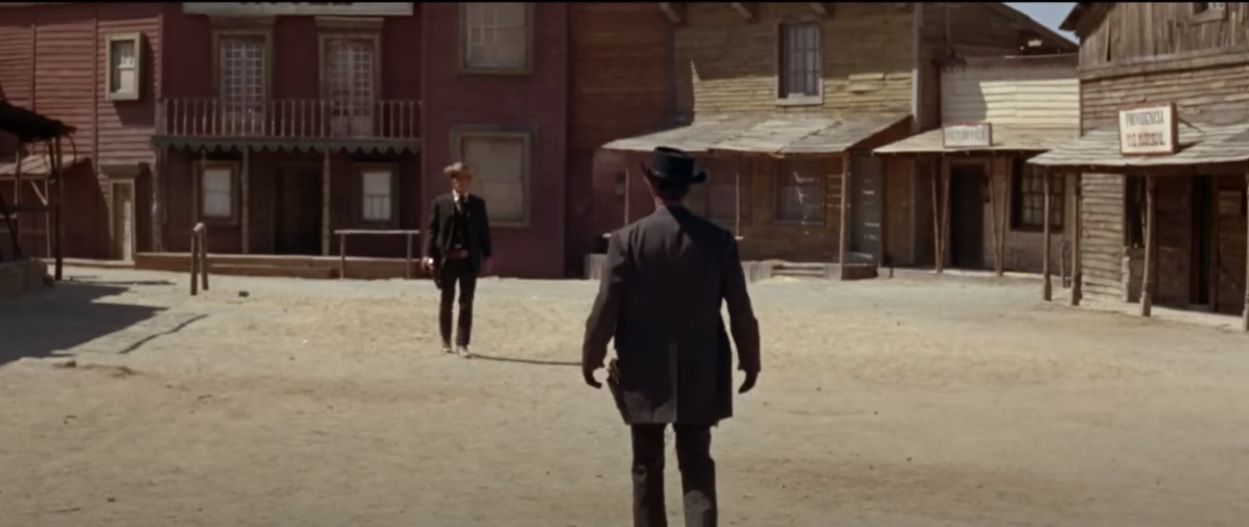
A few months ago, as the final edits on my first-ever western screenplay were hitting the home stretch, I decided to indulge in a 20-movie Spaghetti Western Bonanza marathon to recharge and recalibrate. My script, Bull Head & Blind Rage, is an epic-sized oater rendered in the late ’60s, early ’70s spaghetti western style with a touch of acid western influence thrown in for good measure. In case you’re a little fuzzy on that particular lysergic subgenre, may I direct you to a few of my “hippie western” faves: Monte Hellman’s existential cowboy double-header The Shooting and Ride in the Whirlwind, Peter Fonda’s The Hired Hand, Robert Downey, Sr.’s Greaser’s Palace, Peckinpah’s Pat Garrett & Billy the Kid, and, let’s not forget, Alejandro Jodorowsky’s surreal cult classic, El Topo. A quick glance at the acid western Wikipedia page will tell you it’s a relatively modest, short-lived subgenre of western, not too difficult to work your way through in a few weeks or a month. As for the spaghetti half of the equation…well, just click on this lengthy Wikipedia pasta menu and strap yourself in.
I’d seen many of the “essential” spaghetti(s) years and years ago, well before starting my script, some of them multiple times during my film school days. There’s Sergio Leone’s genre-defining Dollars/Man With No Name trilogy, of course (A Fistful of Dollars, For a Few Dollars More, The Good, The Bad & The Ugly), as well as my personal favorite of his westerns, Once Upon a Time in the West. Then there’s the other prerequisite Sergio, Mr. Corbucci, who I came to a little later but soon binged with similar vigor after seeing the original Django (1966), quickly working my way through his western filmography (Navajo Joe, The Hellbenders, The Mercenary, The Great Silence, The Specialists, Compañeros, Sonny and Jed) minus a few at the beginning and end of his impressive decade-long run. I’d also dug into several Django sequels, official and unofficial, as well as indulging my fair share of Ringos, Sabatas, Sartanas, even dipping a toe into spaghetti comedy with the Terrence Hill/Bud Spencer Trinity series.
Yet, there were still many, many variants of the Italian-derived western to see well after I had finished my first draft (and second, and third…) That’s the beauty of the spaghetti subgenre—no matter how many iterations of screenplay it takes, there’s always another obscure Euro horse opera to keep me company. As I soon discovered, there’s even a third Sergio (Sollima) to add to the great western directors’ pantheon. In all my years of bingeing, his work had somehow eluded me, as well as that of other genre masters like Damiani, Dallamano, and Valerii.
The twenty films featured below are a curated compendium of the many eclectic ’60/’70s cowboy flicks I’ve watched over the last few script-editing months. Many of them originally came to me as recommendations from Alex Cox’s fantastic genre primer 10,000 Ways to Die: A Director’s Take on the Spaghetti Western. A few more derived from Quentin Tarantino’s Top 20 list that he released around the time of Django Unchained’s theatrical run. If you’d like to play along, a sizeable chunk are now available for free on my current FAST streaming service of choice, Tubi. If you’re willing to endure an onslaught of even more repetitive, AI-narrated ads, you can also find nearly all of them on the YouTube western channel linked here. Oh, and speaking of advertisements, how about one for myself? In case you were wondering what my screenplay is about exactly, here’s the latest logline…
BULL HEAD & BLIND RAGE (spaghetti/acid western) - Two battle-scarred Civil War veterans, a one-eyed Confederate gunman and a Yankee hangman with a bovine cranial plate, descend on the diseased Texas mining town of Saltlick to settle old scores and search for a storied, stolen gold cache with the help of a resourceful saloon girl and a stoic Comanche brave.With that little narrative nugget in mind, you’ll probably see why I tracked down some of these lesser-known titles with similar themes for a quick look-see. Note that many of these films have multiple titles themselves, one of the many charms of Italian exploitation film distribution. My marathon 20-course spaghetti dinner left me a little bloated but mostly satiated. I hope you, dear reader, feel the same.
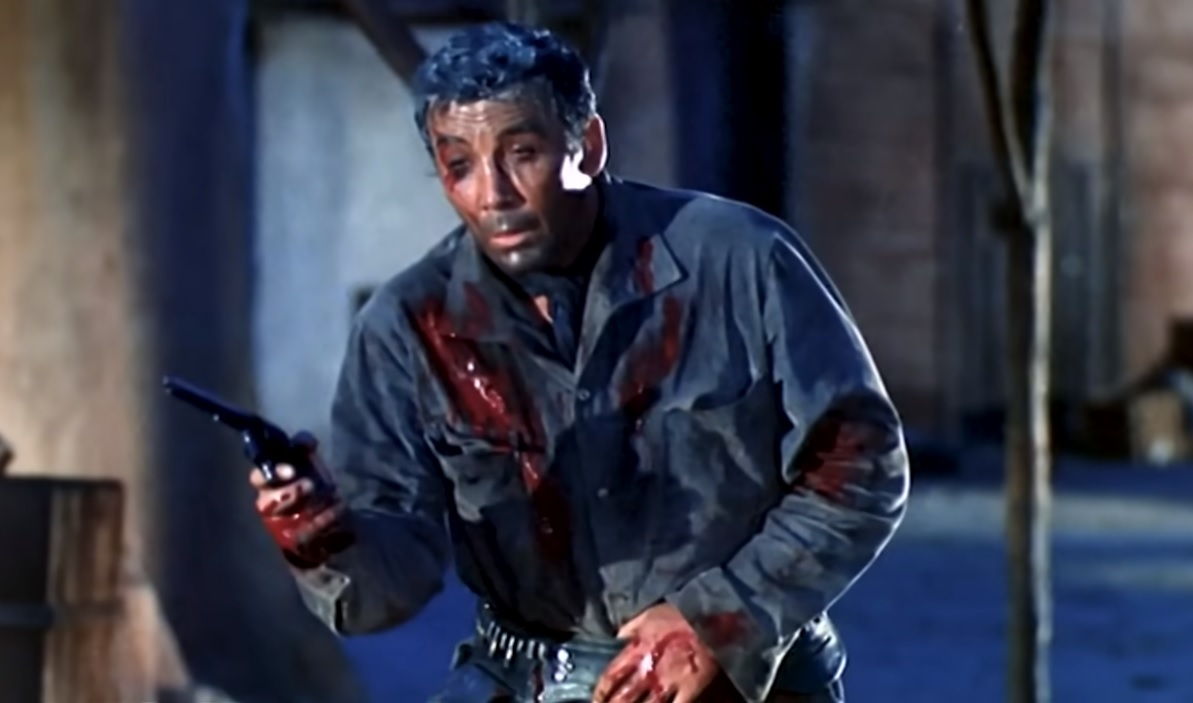
MINNESOTA CLAY (1964) – Sergio Corbucci
Italian exploitation stalwart Cameron Mitchell stars as an aging gunfighter going blind who escapes a penal colony to track down his old frenemy, Fox, who set him up for the fall with a job gone wrong. He looks up his long-lost daughter while in town, gets involved in turf war with Fox’s men, as well as a band of surly Mexicans. There are lots of blurry, double-image POV shots as Clay loses his sight, in addition to a well-staged nighttime shootout at the end where near-blind Clay uses random sounds to locate and pick off Fox and his gunmen one by one. Sure, it’s post-Zatoichi, but then Clay also predates John Wick: Chapter 4’s blind assassin Cain by nearly 60 years. A solid, if not terribly inspired, early Corbucci effort. Better than his very first western that same year, Massacre at Grand Canyon, at least.
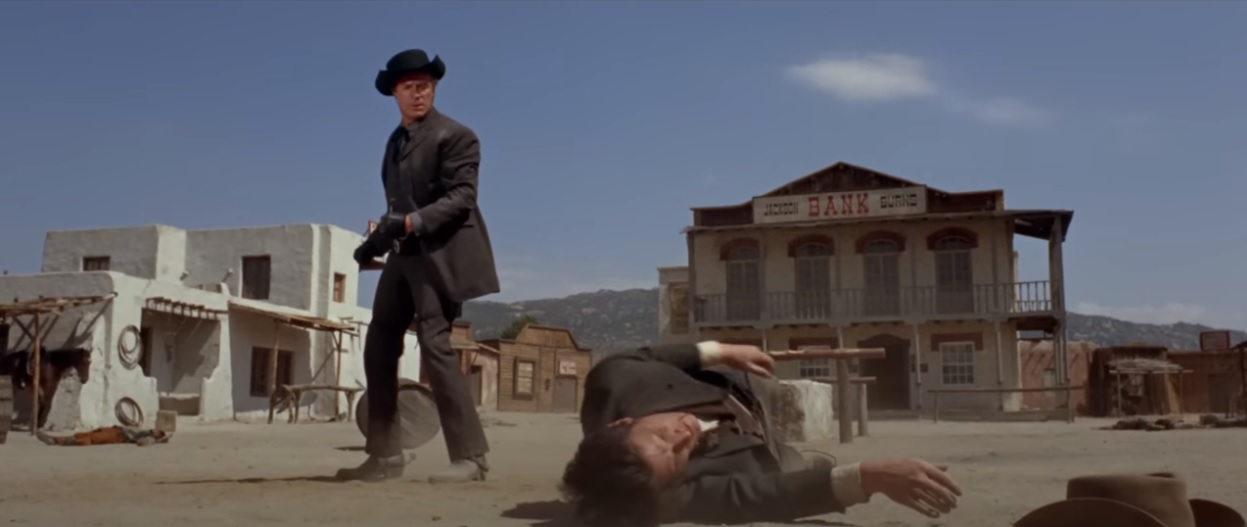
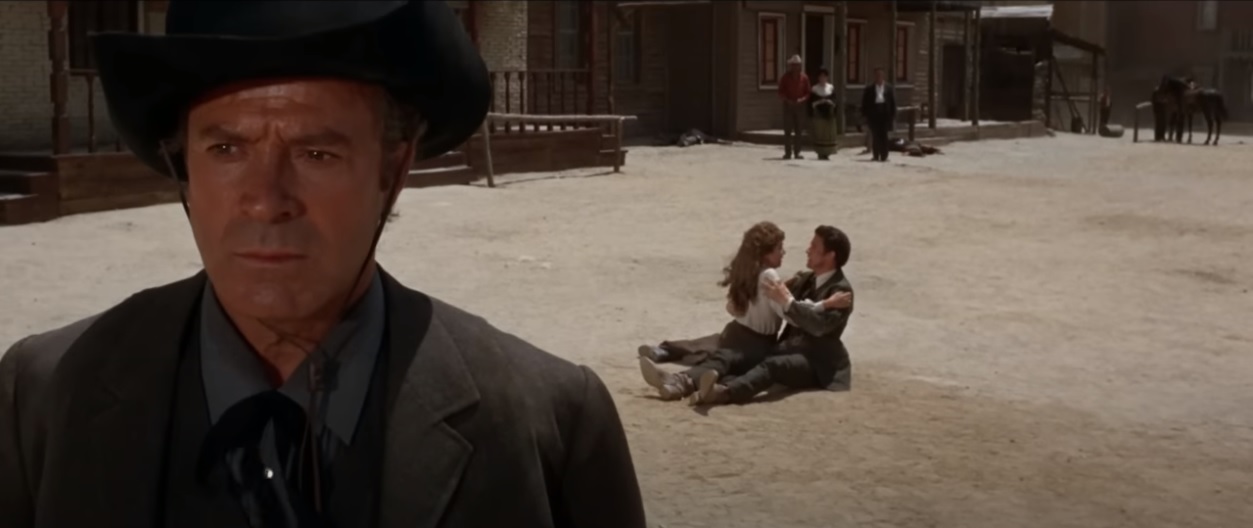
IN A COLT’S SHADOW (1965) – Gianni Grimaldi
Two ex-partner gunfighters, young buck Steve and old pistolero Duke, come to blows after Steve decides to bury his guns and take up homesteading with Duke’s daughter. But their beef will have to wait because there’s a slimy financier with a wooden hand in town who’s in sore need of killing. Though the plot’s pretty boilerplate, Shadow’s highlights include a great hand-painted opening title sequence with a supremely silly accompanying cowboy ballad, interesting widescreen compositions alongside some of the worst dubbing known to man, and a well-crafted climactic main street showdown between Duke and Steve which quickly turns into two-man team-up to kill most of the baddies in town. This film certainly stands in the long shadow Fistful made the year before (it even repurposed a few of its legendary sets), but as an early stab at an Italian/classic American western mash-up, it’s not half bad.
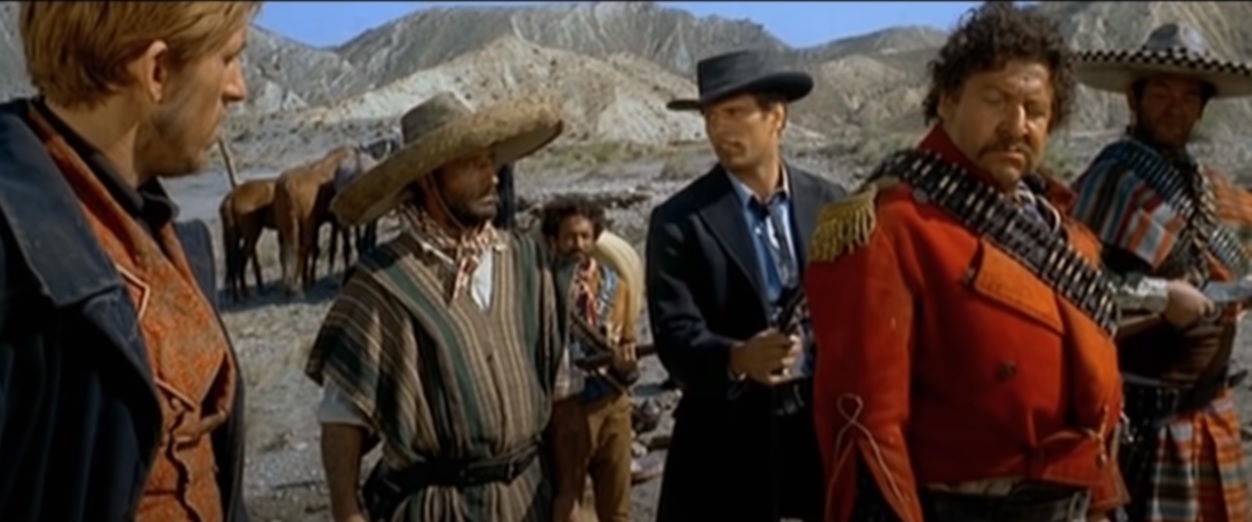
ARIZONA COLT (1966) – Michele Lupo
Giuliano Gemma, on loan from the first two Ringo movies, stars as trickster gunfighter Arizona Colt, so named because he happens to be in Arizona at the time and carries the titular sidearm. After being accidentally freed in a prison raid by the swarthy, portly bandit Gordo (an enjoyable Fernando Sancho), Arizona demurs on Gordo’s offer to join his gang of Sidewinders (branded with a “S” in their flesh) and instead spends the rest of the movie being a saddle sore in Gordo’s ass, foiling his various robbery schemes and gold-heisting attempts. One standout scene involves Arizona arranging the bodies of Gordo’s dead henchmen to spell out the word “NO” in answer to his ongoing recruitment tactics. It seems Arizona prefers the company of a lively comic-relief drunkard named Double Whiskey (Roberto Camardiel), a good thing since his love interest Jane (Corinne Marchard) is kind of a WASP-y bore. There are a few fun, though recognizable, lifts from Leone’s Dollars trilogy, including a very long-barreled pistol, a musical watch, and a gag involving fake arms in a jacket used to obscure a hidden pistol. The final gun battle between Arizona and Gordo amid numerous caskets in the undertaker’s quarters gets the job done.
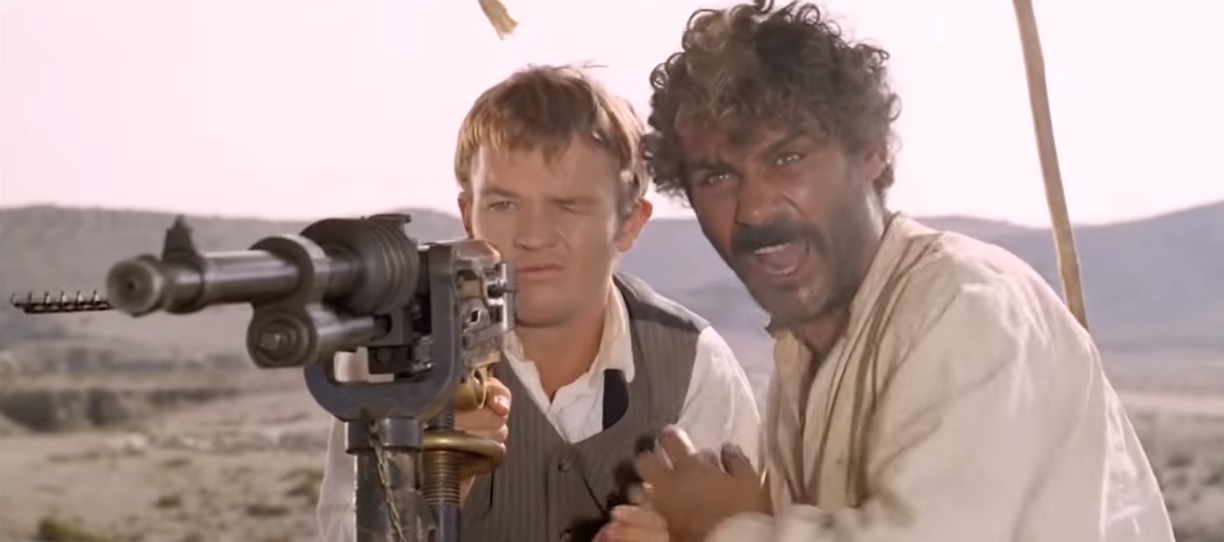
A BULLET FOR THE GENERAL / QUIEN SABE? (1966) – Damiano Damiani
It’s somewhat shocking that I had never seen this classic Zapata western, given that my perennial favorite, The Wild Bunch, three years later is so much in its debt. A brilliantly unhinged Gian Maria Volonté (from both Fistful and Few Dollars) stars as the conflicted gun runner El Chuncho, torn between his selfish bandit ways and his desire to be a true Mexican revolutionary in the service of dissident General Elias. He makes the mistake of befriending the white American devil Tate (an ice-cold Lou Castel) during a train holdup, believing he’s on the run from the law south of the border, though he’s really an agent of the Mexican government with a gold bullet in his valise destined for revolutionary General Elias’s forehead. Director Damiani deftly manages tricky tonal shifts between idealism and futility in a cynical portrait of just causes gone wrong, undone by greed and the desire for large gold-plated machine guns.
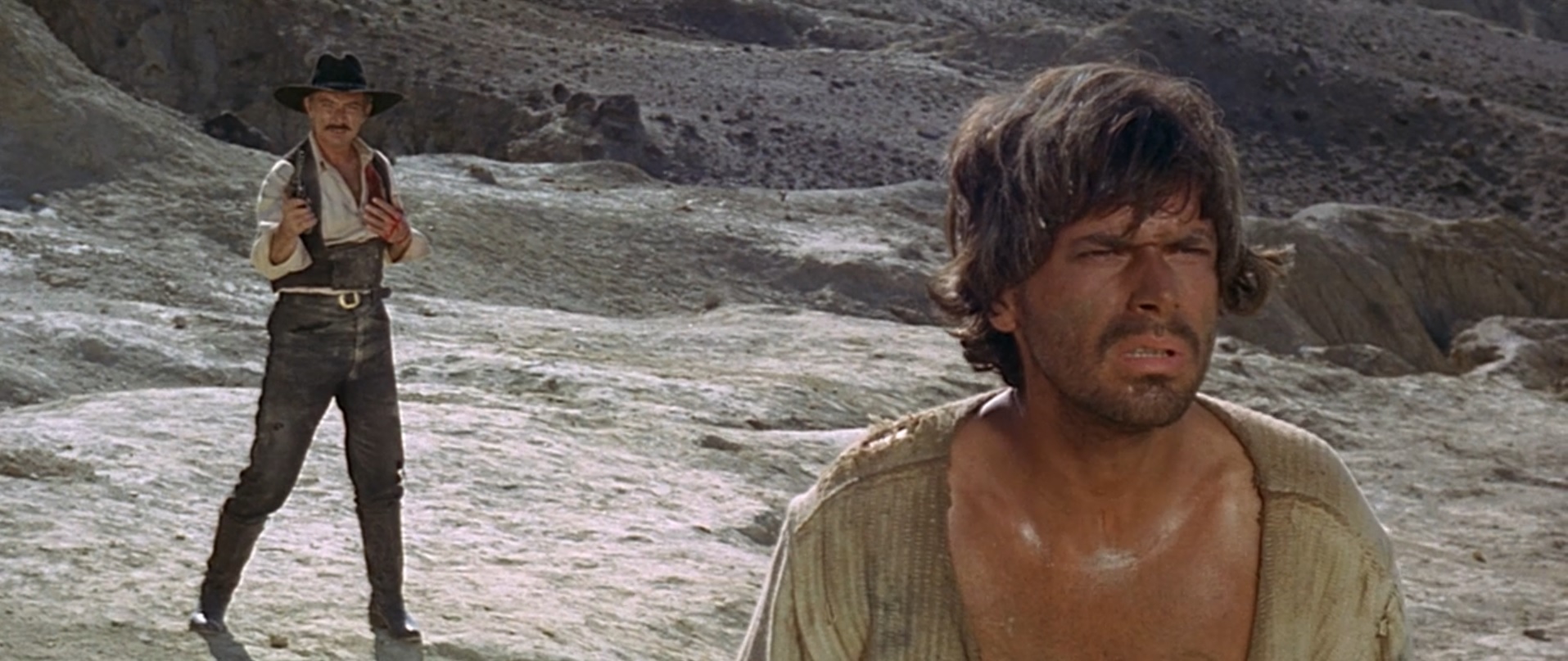
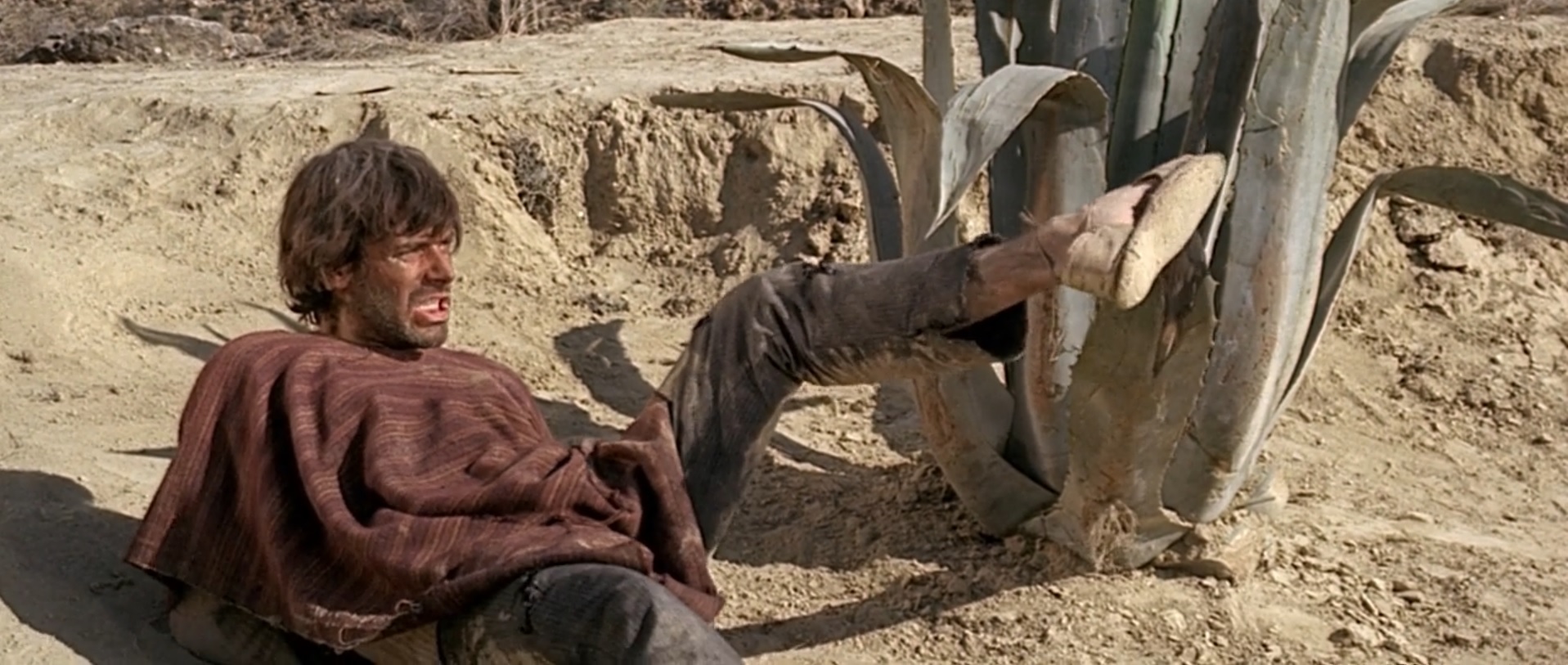
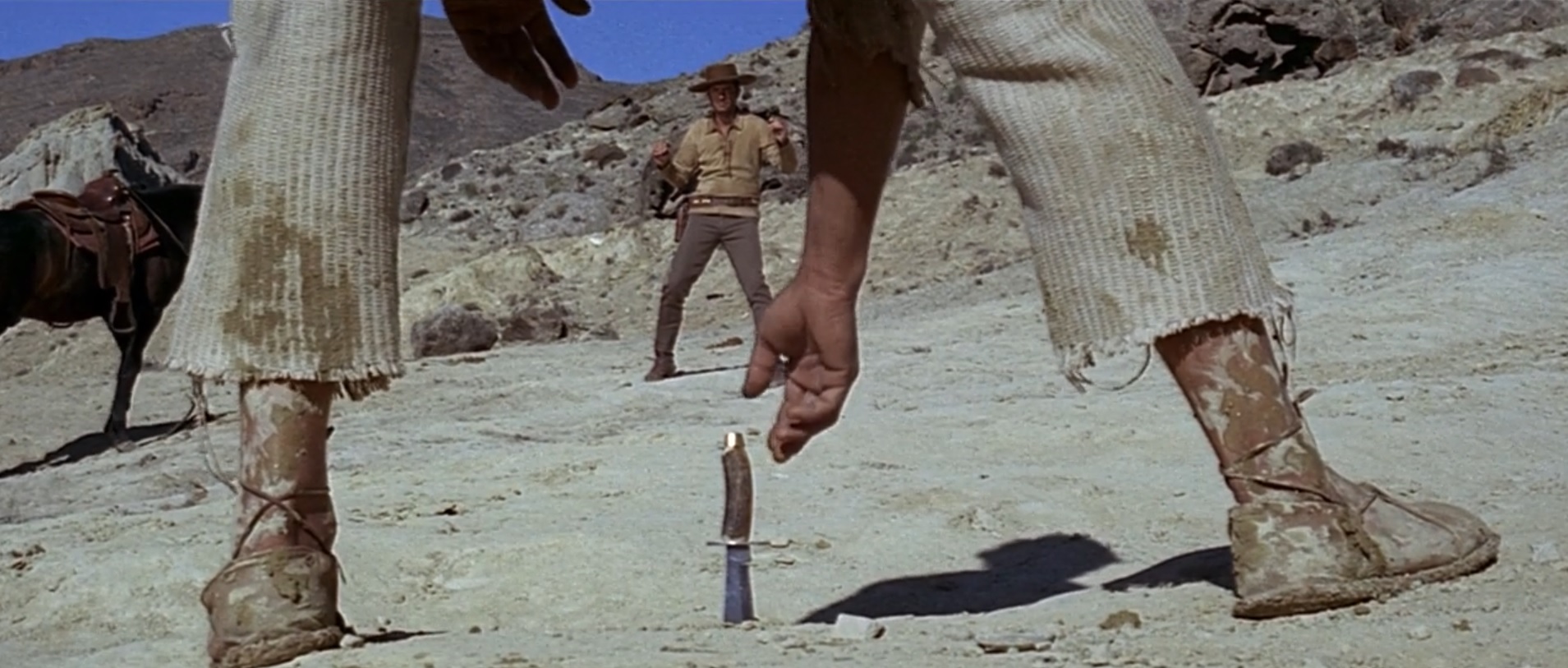
THE BIG GUNDOWN (1967) – Sergio Sollima
Lee Van Cleef, fresh off his turn as “The Bad” in The Good, The Bad and The Ugly, stars as Corbett, a notorious bounty hunter with political aspirations who’s tasked with the not-so-enviable job of tracking down the wily Mexican bandit Cuchillo (Tomas Milian) who’s been accused (falsely, it turns out) of raping and murdering a twelve-year-old local girl. After giving him the slip several times (barber chair, whorehouse, a Mormon wagon train, a brutal horse ranch), Cuchillo finally succumbs to Corbett’s rope, only to escape once more with a clever ruse involving a cactus burr disguised as a deadly snakebite. Eventually, the two establish a grudging respect, and Corbett realizes Cuchillo may not be as guilty as the railroad men who initially hired him. In his very first western outing, director Sollima immediately establishes himself as worthy heir to the throne of the other two Sergios (Leone, Corbucci). The fantastic/bombastic throat-trilling score by Ennio Morricone doesn’t hurt either, nor does the monocled Austrian baron with a German-designed fast-draw holster and a climactic gun-versus-knife desert showdown to rival the cemetery standoff in TGTBATU.
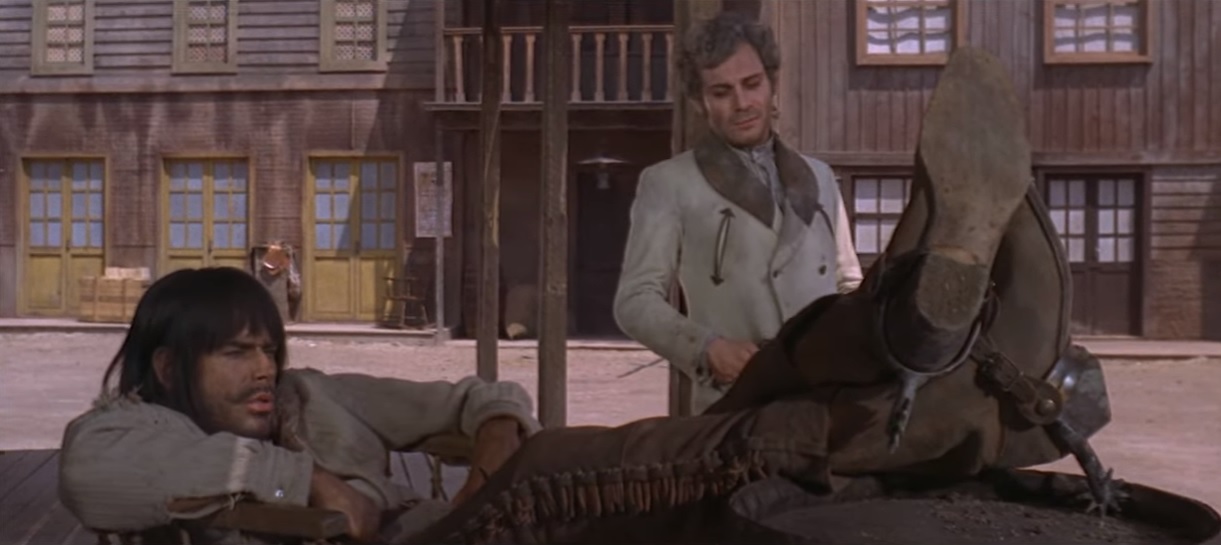
FACE TO FACE (1967) – Sergio Sollima
Gian Maria Volonté makes a major character heel turn from El Chuncho the year before as Brad Fletcher, a Boston man of letters with breathing issues who gives up his cushy professor job to head out West for fresher air. It’s not long before he becomes a man of action (and later, of treachery) when he falls in with half-breed bandit Beauregard Bennett (Tomas Milian again, sporting one of the worst wigs in cinema history). Soon, Brad is brandishing pistols, bashing his foes’ heads against rocks, planning elaborate bank robberies, and performing impromptu homoerotic surgery, removing a bullet from Bennett’s side with a knife (“Stick it in further!”). William Berger is along for the ride as an undercover Pinkerton agent there to provide further plot complications, as Beau decides, witnessing Brad’s ever-increasing bloodlust, that maybe it’s time to change his own outlaw ways. This second Sollima western outing is a refreshingly moral role-reversal tale with more fantastic widescreen compositions.
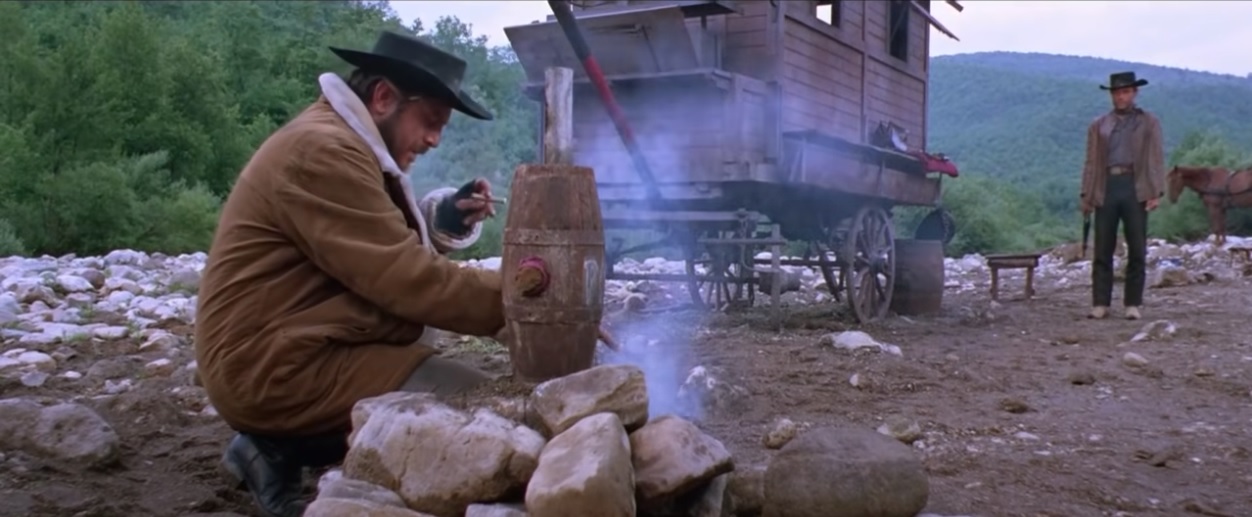
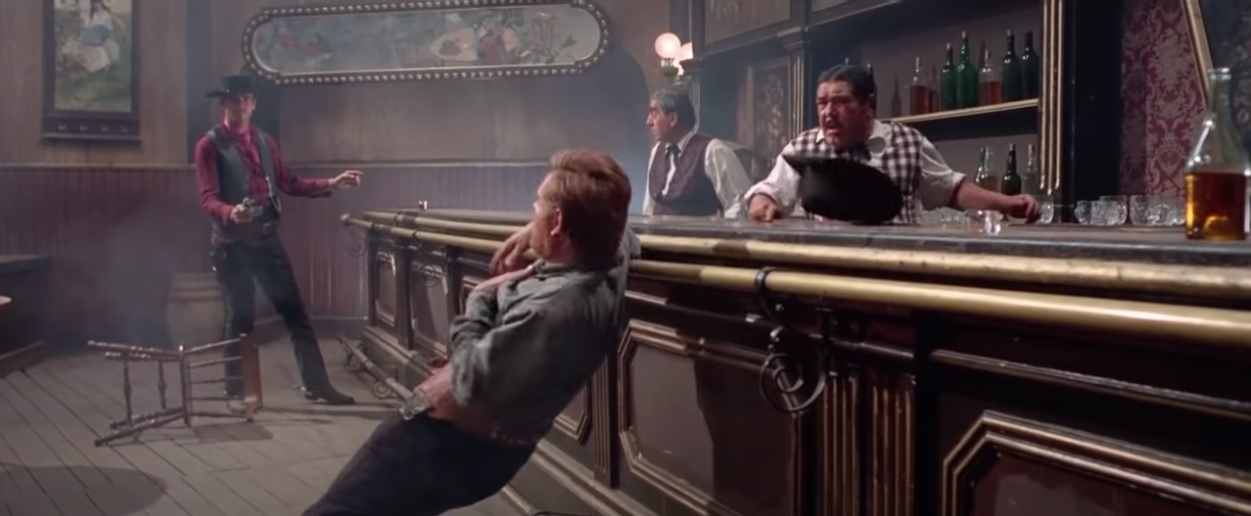
BANDIDOS (1967) – Massimo Dallamano
Broken-down gunfighter Richard Martin (Enrico Maria Salerno) recruits a young protégé (Terry Jenkins) to perform in his sharpshooting sideshow but also to take revenge in his stead on the villainous Billy Kane (Venantino Venantini) who wounded his fast-draw hands during a train holdup years ago. Bandidos is a sturdy torch-passing old cowboy/young gun tale enlivened by breathtaking camerawork from Fistful & Few Dollars cinematographer-turned-director Dallamano. Behold the gorgeous deep-deep focus shots, eerie Lady in the Lake-style traveling POVs, and an extended train massacre tracking sequence that nearly rivals Godard’s famous seven-minute traffic jam dolly in Weekend that same year. A lesser-seen spaghetti gem, worthy of reevaluation.
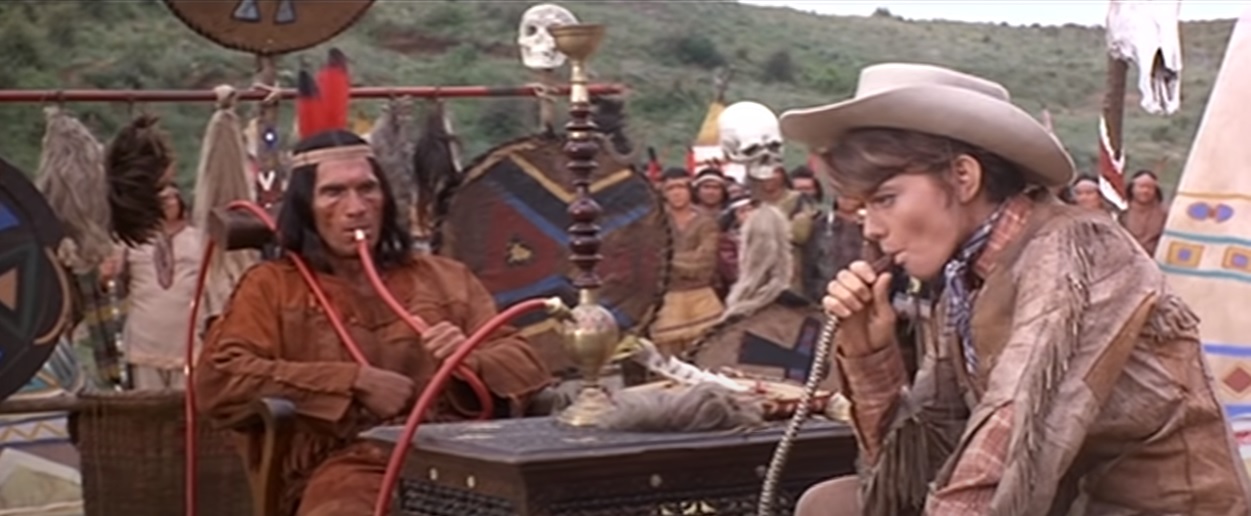
CRAZY WESTERNERS / RITA OF THE WEST (1967) – Ferdinando Baldi
If you’re looking for a change of pace after a heap of grimly macho, serious-minded spaghetti efforts, you could do worse than this fun, female-led, musical western spoof from the always entertaining maestro of low-rent 3D, Ferdinando Baldi. Plucky Italian pop star Rita Pavone stars as a grenade-packing gunslinger who teams up with her German sidekick Fritz and the Native American chief “Silly Bull” in an effort to blow up all the West’s gold (“the root of all evil!”), stolen from such notable genre luminaries as the Ringo, Django, and even the James Gang. One-time Django Terrence Hill is also in the mix as Rita’s love interest, Black Stan. Programmer’s Note: A strong hookah hit of your preferred desert herb may greatly enhance your enjoyment of this one.
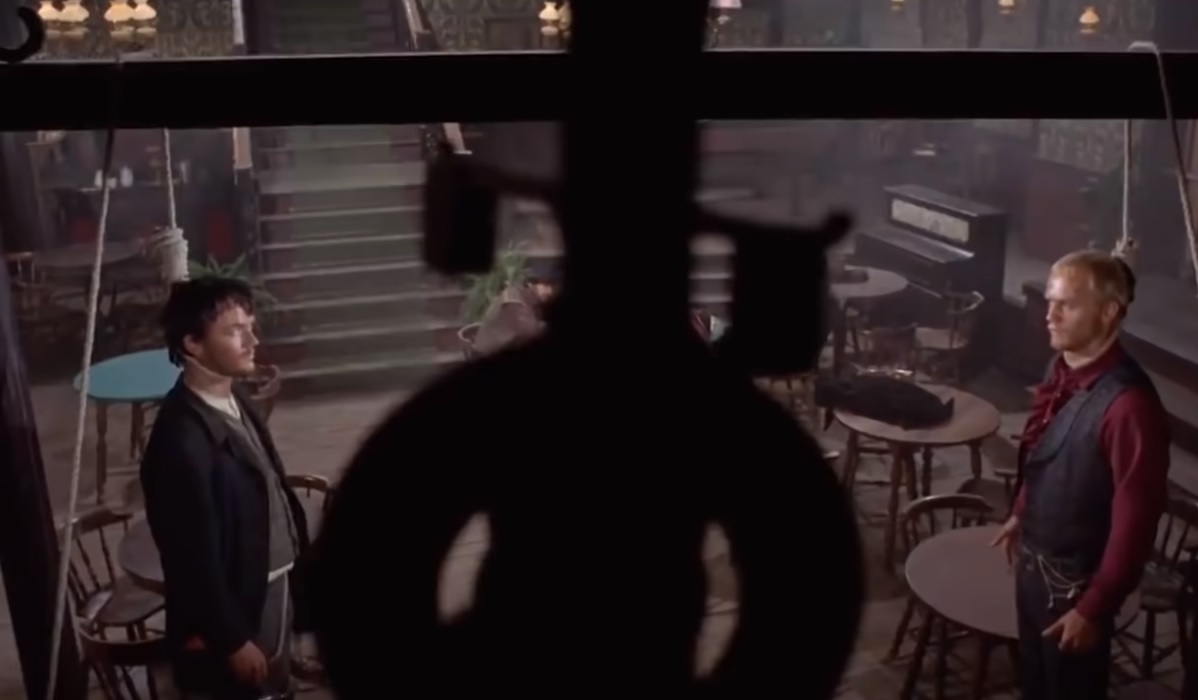
REQUIESCANT / KILL AND PRAY (1967) – Carlo Lizzani
Perhaps the first and only spaghetti western to open with a peace treaty scene, one which inevitably turns into a Mexican peasant massacre under the diabolical schemes of renegade Confederate Fergusson (Mark Damon). Lou Castel, playing the polar opposite of his white devil role in A Bullet for the General, stars as a pacifist, half-Mexican gunman, Jeremy, who escaped the massacre as a child and was taken in by a religious white family. He grows up to become a seeker of justice and of his half-sister Princy who was abducted by the foul Fergusson’s henchman. Jeremy soon adopts the nickname “Requiescant” for his habit of spouting Latin Biblical phrases (“Let them rest in peace”) after inadvertently or purposely gunning someone down. He also has a bad habit of spurring his horse onward by banging a frying pan on its butt repeatedly, not the most saintly of riding techniques. Requiescant is an offbeat Italian attempt to expunge (and wallow in) the sins of the Old West with a peculiarly contradictory character at its center. It’s a little slow and borderline pretentious in spots, but at least there’s a creative noose-bound saloon showdown, deaths by church bell, and noted heathen auteur Pier Paolo Pasolini (of Salo fame) running around in a priest’s frock to keep things interesting.
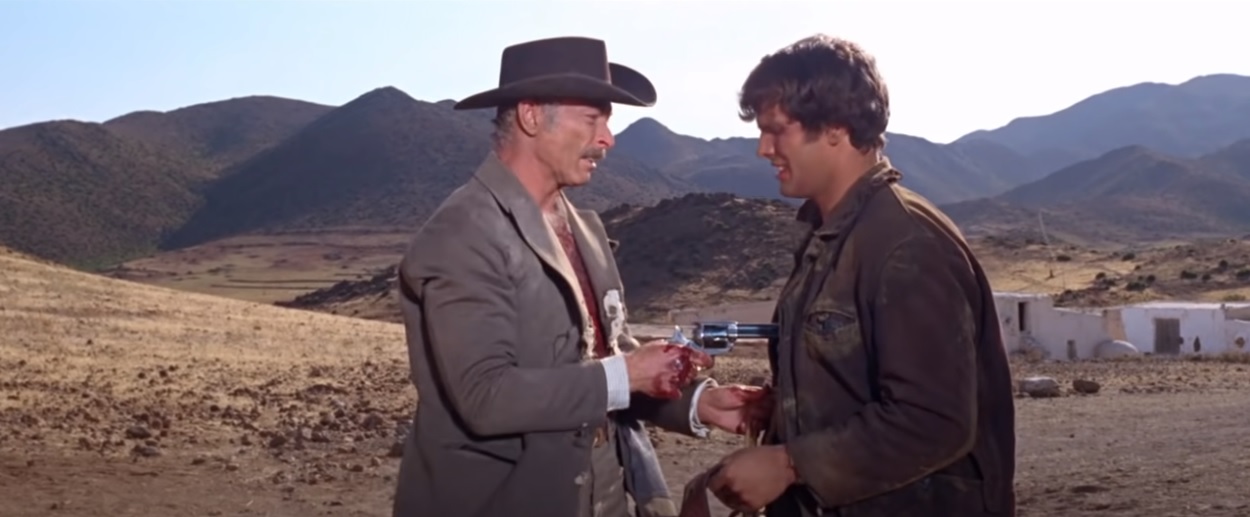
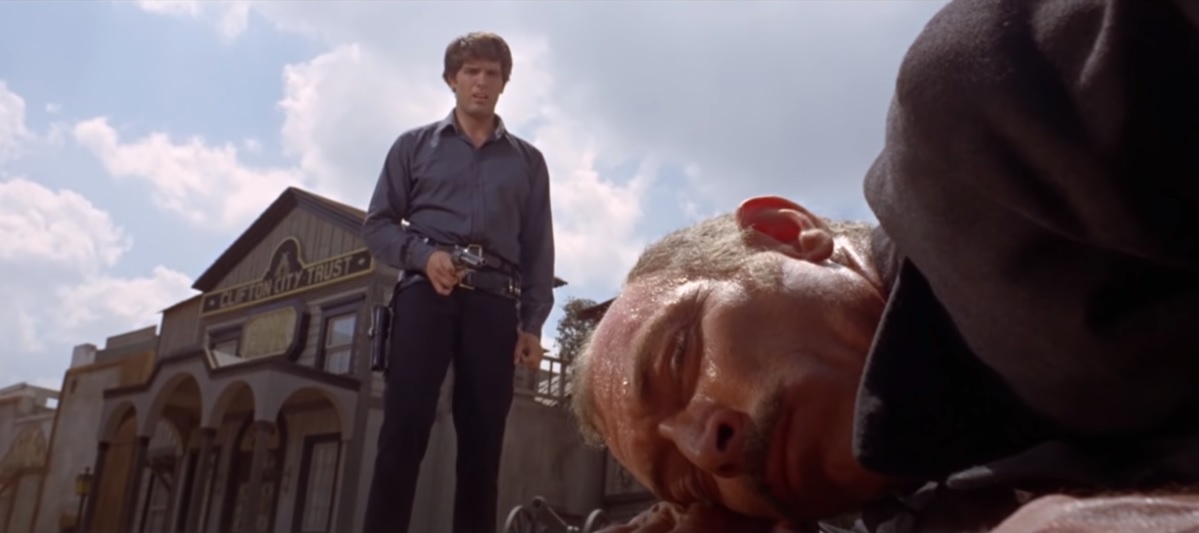
DAY OF ANGER (1967) – Tonino Valerii
Yet another tale of an aging gunfighter passing the six-chambered torch to a younger protégé who will eventually not only succeed but surpass him in fast-draw technique. This time, Lee van Cleef plays the weathered gunman, Talby, who arrives to the town of Clifton in search of money he’s owed from a past robbery. He soon takes the naïve latrine/spittoon cleaner Scott Mary (Guiliano Gemma) under his wing and teaches him the ten rules of being a successful gunfighter as he wipes out the cretins who stiffed him in the past, later becoming something of a domesticated villain himself. It’s little surprise when it finally comes time for Scott to face down his old mentor in a high-noon street duel, although Talby might not have expected to the ex-janitor to employ legendary cowboy Doc Holliday’s own gun against him. A fun if predictable master/pupil yarn enlivened by lived-in performances from Van Cleef and Gemma and brisk direction by former Leone protégé Valerii.
JOHNNY HAMLET (1968) – Enzo Castellari
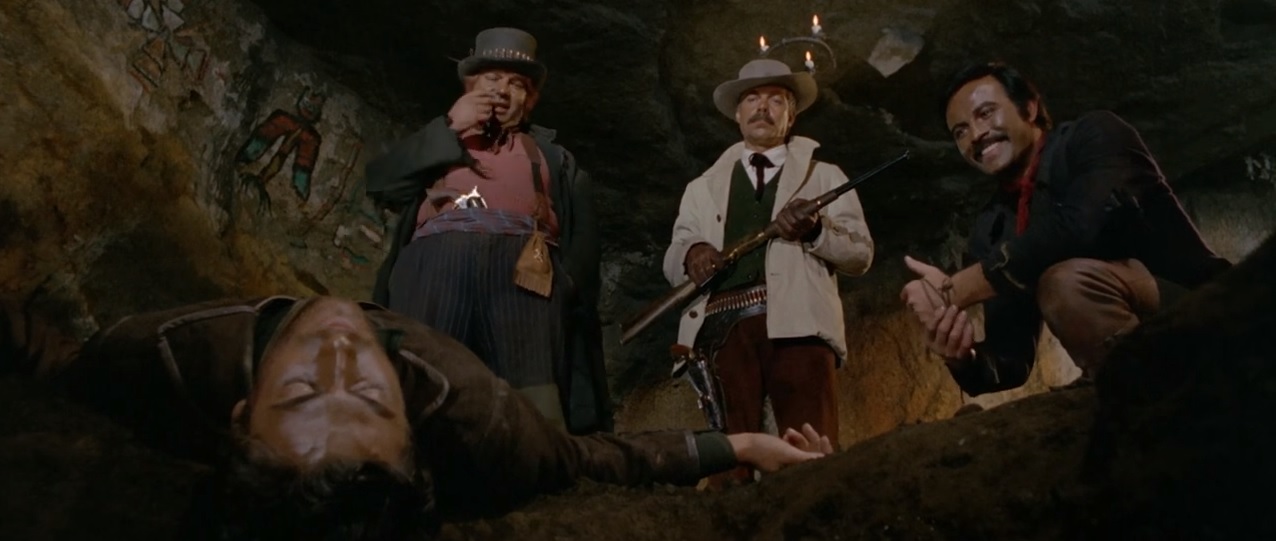
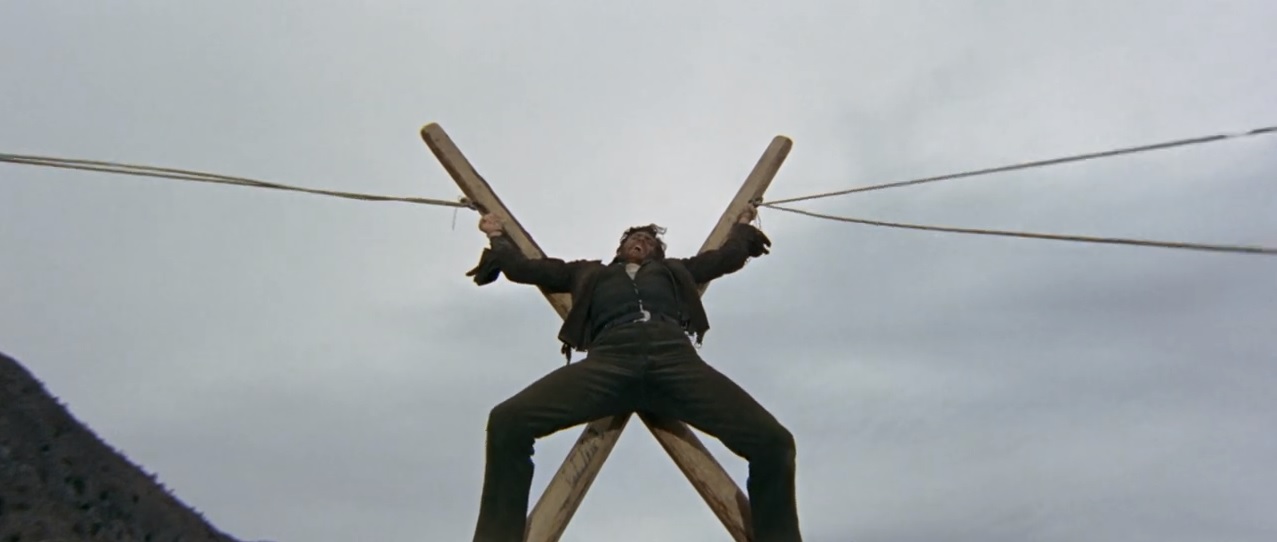
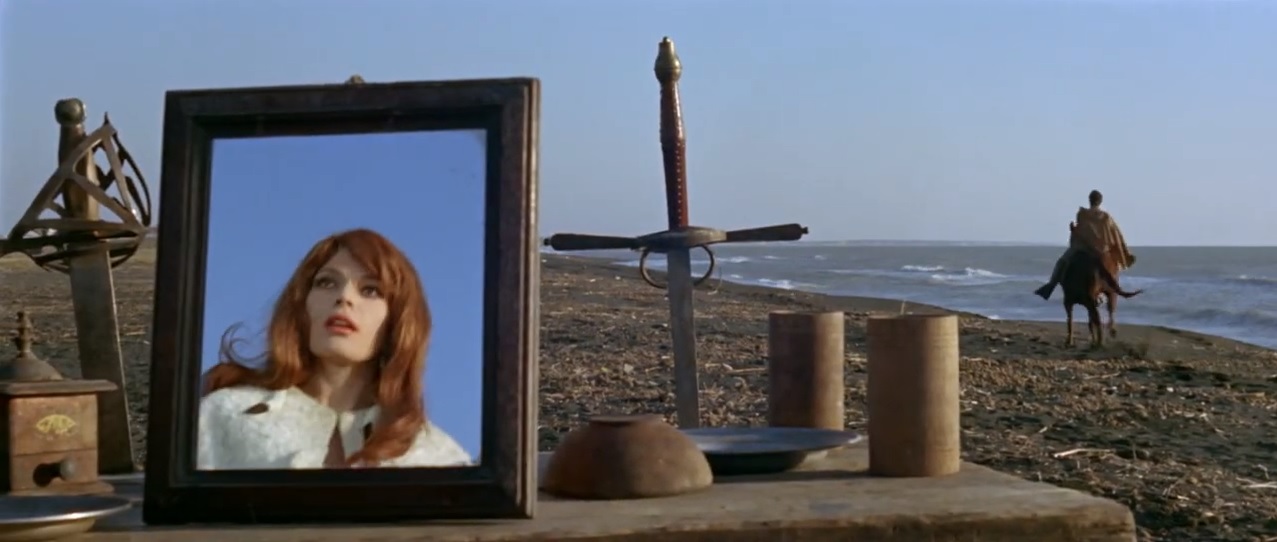
If you thought the Italian western too low-rent to take on the Bard, well, think again! This stylish spaghetti spin on the classic Shakespeare play features a brooding Andrea Giordana as ex-Confederate Johnny Hamilton, returned home to “Ranch El Senor” to take revenge on his father’s killer and new stepfather, conniving Claude (Horst Frank). He gets some help from his buddy Horace (Gilbert Roland), a very busy gravedigger, and a pair of six-guns. Spoiler Alert: The melancholy Dane survives to ride another day in this one. Other than that one instance of extreme dramatic license, there are none too many surprises story-wise, but certainly a smorgasbord of interesting camera angles with shots framed through gun barrels, wine barrels, wagon wheels, bullet holes in sheriff’s badges, etc. Also, a trippy opening dream sequence and some spirited business with an Old West acting troupe. A word of advice for this iteration’s Ophelia (aka “Emily”): Get thee to a gunnery, ASAP!
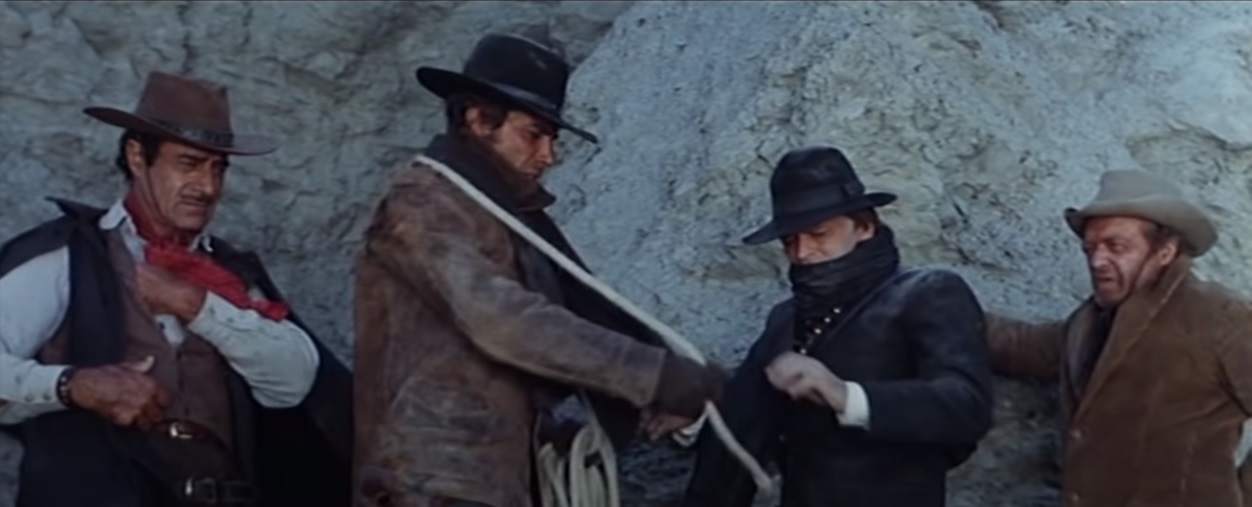
THE RUTHLESS FOUR / EVERY MAN FOR HIMSELF (1968) – Giorgio Capitani
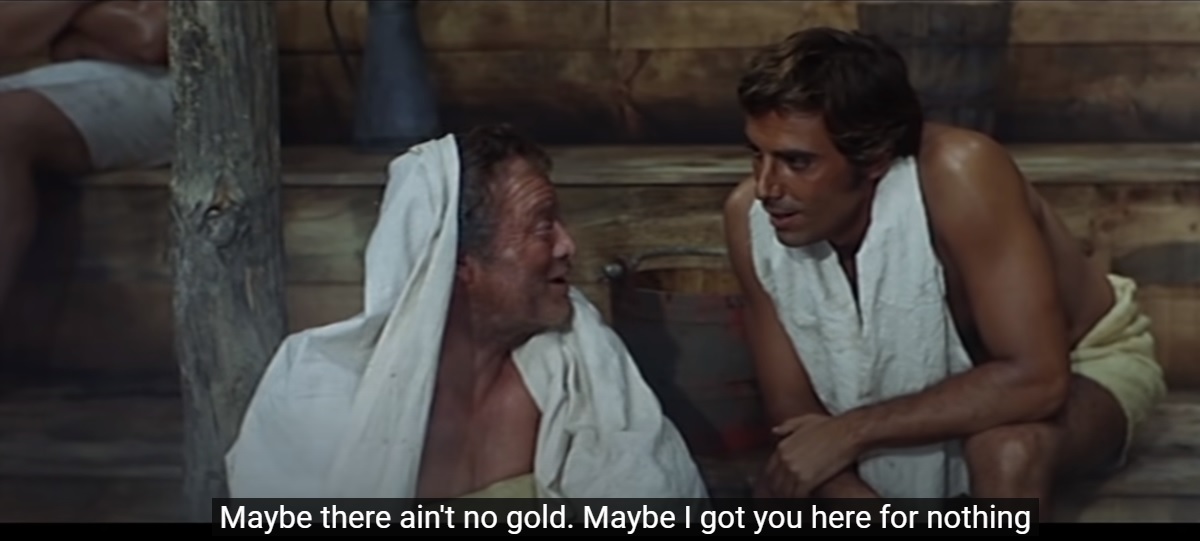
One of the few Italian westerns I’ve seen to prioritize the intricacies of gold prospecting over gunfighting and maybe the only one to feature its dirty main characters steaming in a sauna instead of a lukewarm cathouse washtub. Noted hard-drinker Van Heflin plays an old paranoid prospector, Cooper, who happily takes on a young trusted protégé (George Hilton), then far more reluctantly two additional partners (Klaus Kinski and Gilbert Roland) to help dig out the cache of shiny nuggets he found in a distant cave. Naturally, distrust and paranoia abounds along the way, as do numerous double-crosses. A tight little heist thriller wrapped in western duds. Think Treasure of the Sierra Madre but with more bullets flying, or Reservoir Dogs with fewer f-bombs, set in an abundant mine instead of an abandoned warehouse.
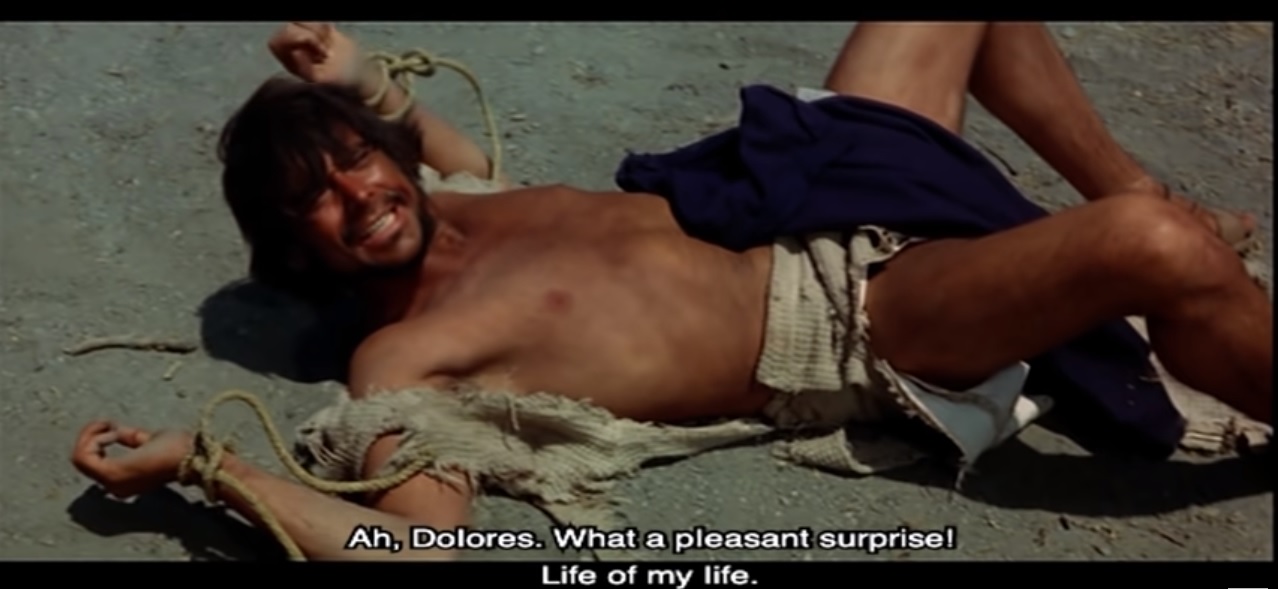
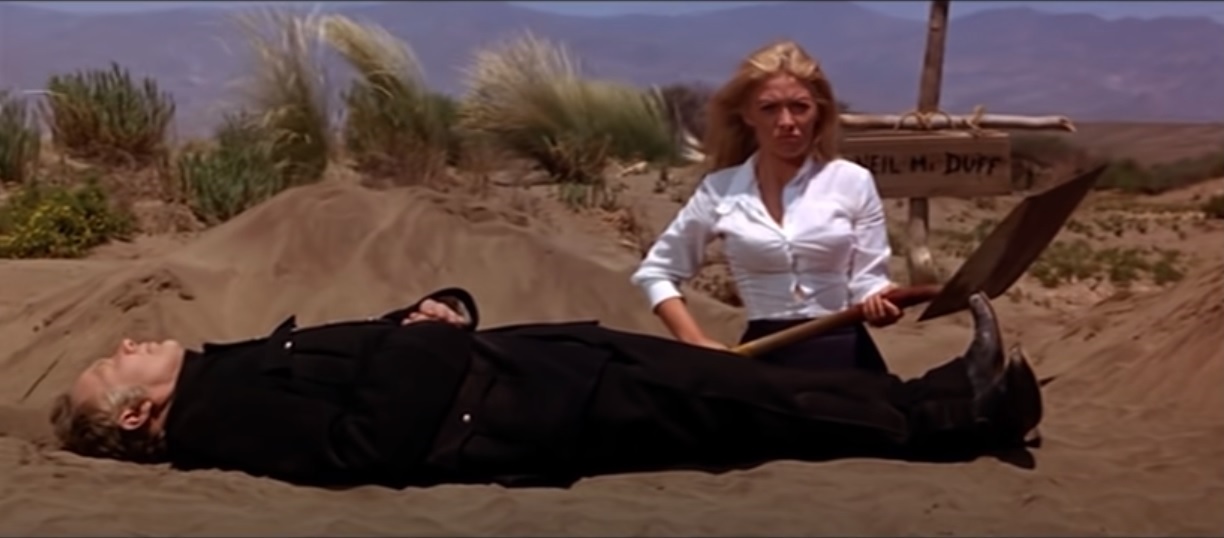
RUN, MAN, RUN (1968) – Sergio Sollima
Sergio Sollima directs a pseudo-sequel to The Big Gundown, following the further adventures of knife-throwing rapscallion Cuchillo (Tomas Milian) as he pilfers his way back to his Mexican hometown, reunites with his angry, abandoned fiancé Dolores (Chelo Alonso), and learns of a buried Texas treasure from a revolutionary poet whom he meets while briefly in jail. He’s pursued by numerous factions in his quest for the legendary gold stash, including French mercenaries, an American bounty hunter named Cassidy (Donald O’Brien) and, most interestingly, an icy blonde Salvation Army sergeant (Linda Veras) with a penitent streak. This is a spirited spaghetti roundabout with more great knife-throwing showdowns and some playful political commentary. Not quite as polished as Gundown or Face to Face but still a lot of fun.
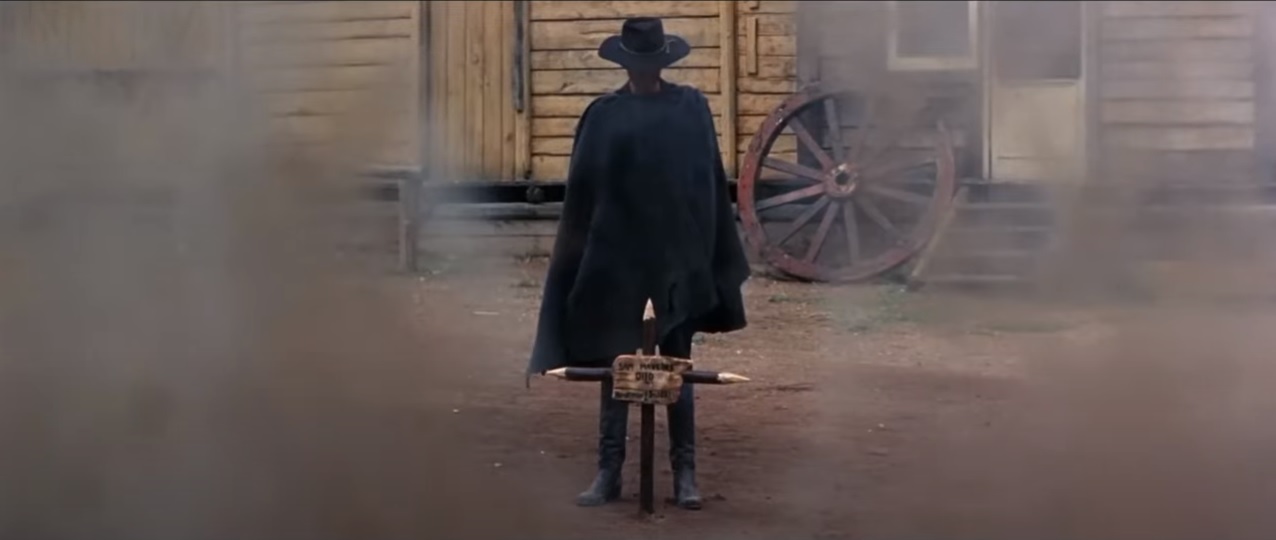
DJANGO THE BASTARD (1969) – Sergio Garrone
Over the years, I’ve seen my fair share of Djangos, from the official Franco Nero entries directed by Corbucci and Rosati, to a handful of “unofficial” versions lensed by the likes of Baldi, Questi, Miike, and Tarantino. Garrone’s is one of the many unofficial Django sequels I’d been reluctant to see, mostly because the black-clad bastard in question is played by the unusually stiff Anthony Steffen. In this iteration, Django is an ex-Confederate (he was Union in the Corbucci original) hunting down the scheming aristocratic turncoats who revealed the location of his regiment to the Yankees during the War. Instead of dragging a coffin filled with guns behind him, he now has a penchant for planting personalized gravestone crosses in the street with the date of his targets’ death already filled in (usually the same day). Spooky! Surprise of surprises, Steffen’s blank calm actually works in his favor here, considering he’s basically playing a ghost, Django appearing to have been killed during the War in the sepia-toned flashbacks. The big bad Rod Murdoch (Paulo Gaozlino) is suitably smarmy, but it’s his epileptic junkie brother Luke (Lu Kamante) and his scheming wife Alida (Rada Rassimov) who really steal the show, bringing a taste of the drugged-out, Vietnam ’60s into the post-Civil War Old West. Add to that a bizarre dynamite throwing contest, an excruciating church rafters hanging, some interesting gothic horror touches and trippy compositions from the lesser-known Sergio (Garrone), and you’ve got one of the better Djangos, maybe even my third favorite behind Corbucci’s and Questi’s.
THE PRICE OF POWER (1969) – Tonino Valerii
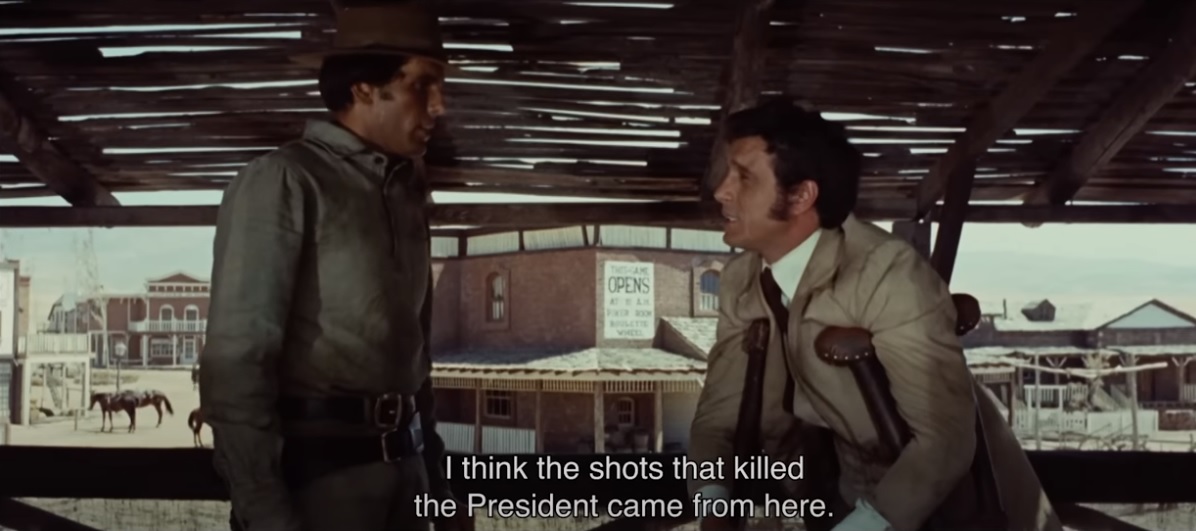
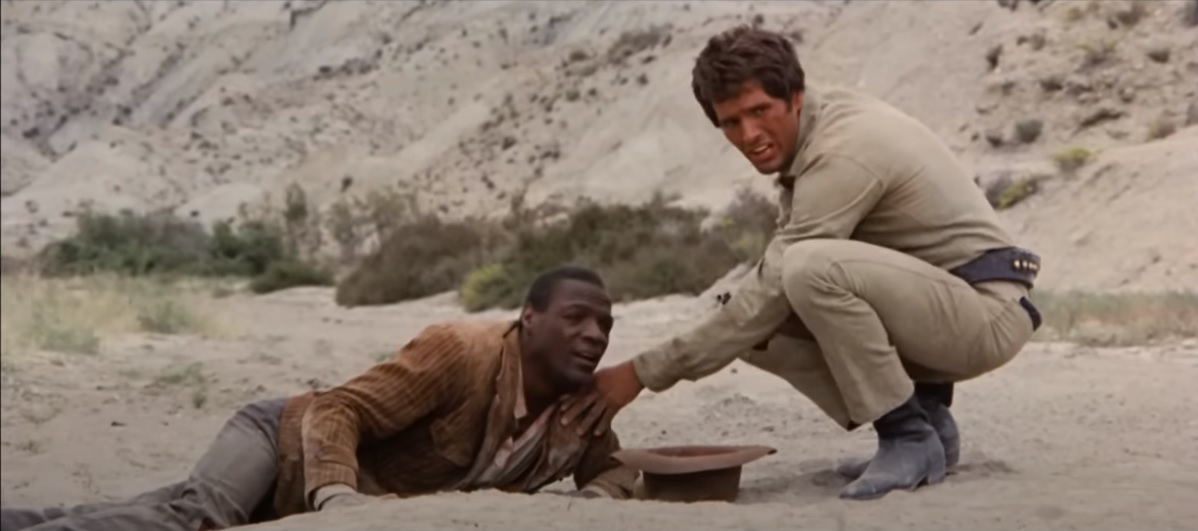
The JFK assassination gets a compelling cowboy reimagining five years later as ex-Union soldier Bill Willer (Guiliano Gemma) and his black compatriot Jack (Ray Saunders) become pawns in a tangled plot to take the life of President Garfield (Van Johnson) during a trip to 1880s Dallas. After Jack predictably becomes the prime suspect post-shooting (i.e., this version’s Lee Harvey Oswald), Bill uncovers a vast conspiracy to start a second Civil War involving corrupt Texas politicians, racist local lawmen, a sleazy Pinkerton detective (a deliciously devious Fernando Rey), and one severely compromised Vice President. And you thought Oliver Stone’s version was complicated! A surprisingly successful grafting of a tried-and-true genre onto then-current events, Power is heavier on plot and lighter on gunplay than your average Italian western but still manages to maintain suspense and relevance. Given the current state of Texas politics, I could easily see much of this still happening today, just with higher caliber weaponry.
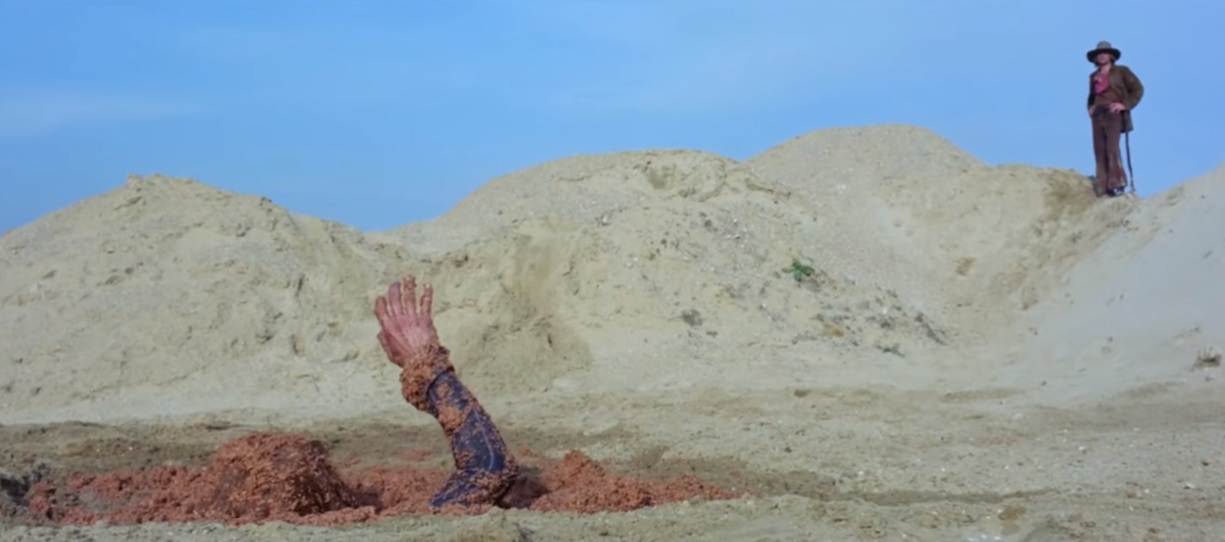
SHOOT THE LIVING, PRAY FOR THE DEAD (1971) – Giuseppe Vari
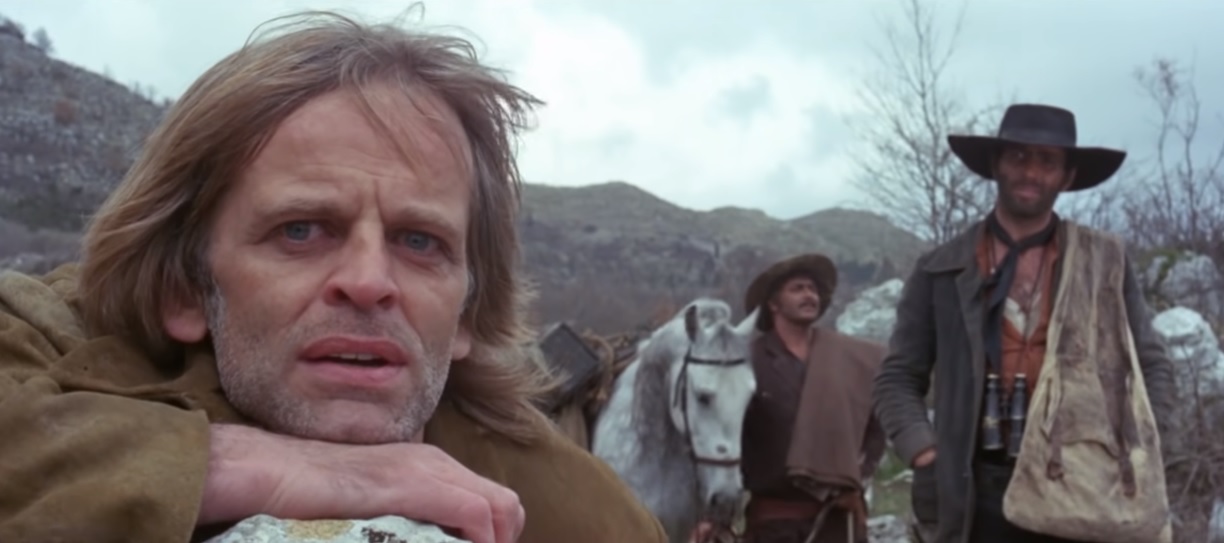
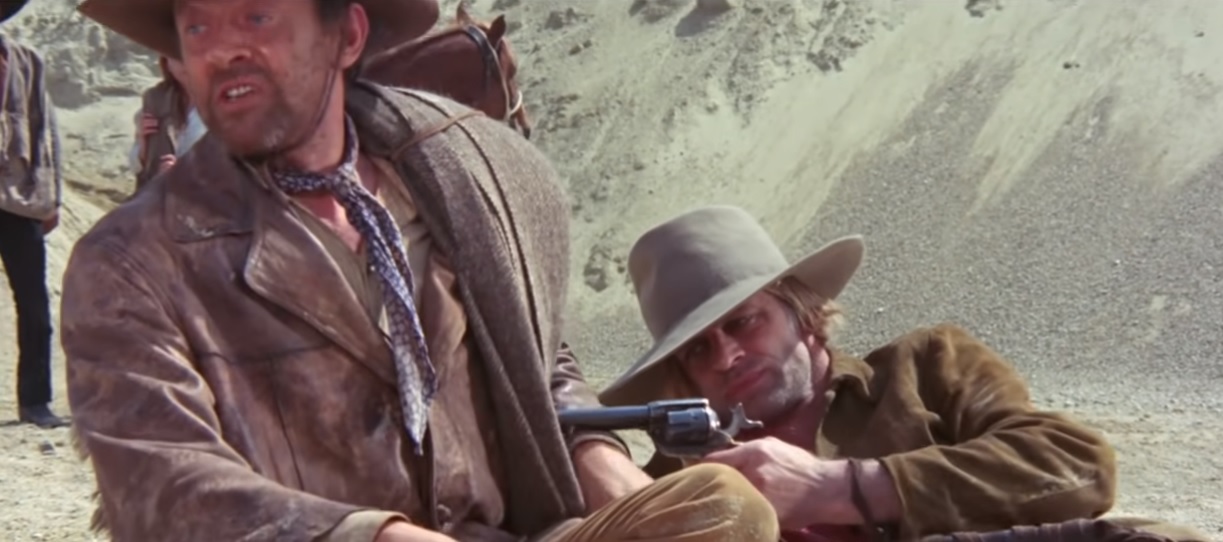
While not the most interesting and/or original western storyline, Shoot the Living is a pretty damn good show reel for just how sadistic/misogynistic a Klaus Kinski spaghetti villain could be. His ex-Confederate/KKK bandit Dan Hogan makes a habit of coldly dispatching his own henchmen point blank in the stomach, right after ordering them to have their way with captive society women in his stead. That is, when he’s not idly watching them slowly sink to their death in desert quicksand from a safe distance. Unfortunately, he is paired with a rather bland opponent, John Webb (Paolo Casella), the guide with a hidden grudge he’s hired to lead him to the border with his stolen gold cache. After basically playing a mute angel of death on a revenge mission the year earlier in And God Said to Cain, Klaus K shines like a dirty diamond in this more loquacious, ostentatious role. It’s a far cry from his moodier tête-à-tête with Jean-Louis Trintignant in Corbucci’s snowbound classic The Great Silence but better than Vari’s previous lackluster western, Hole in the Forehead, from ’68.
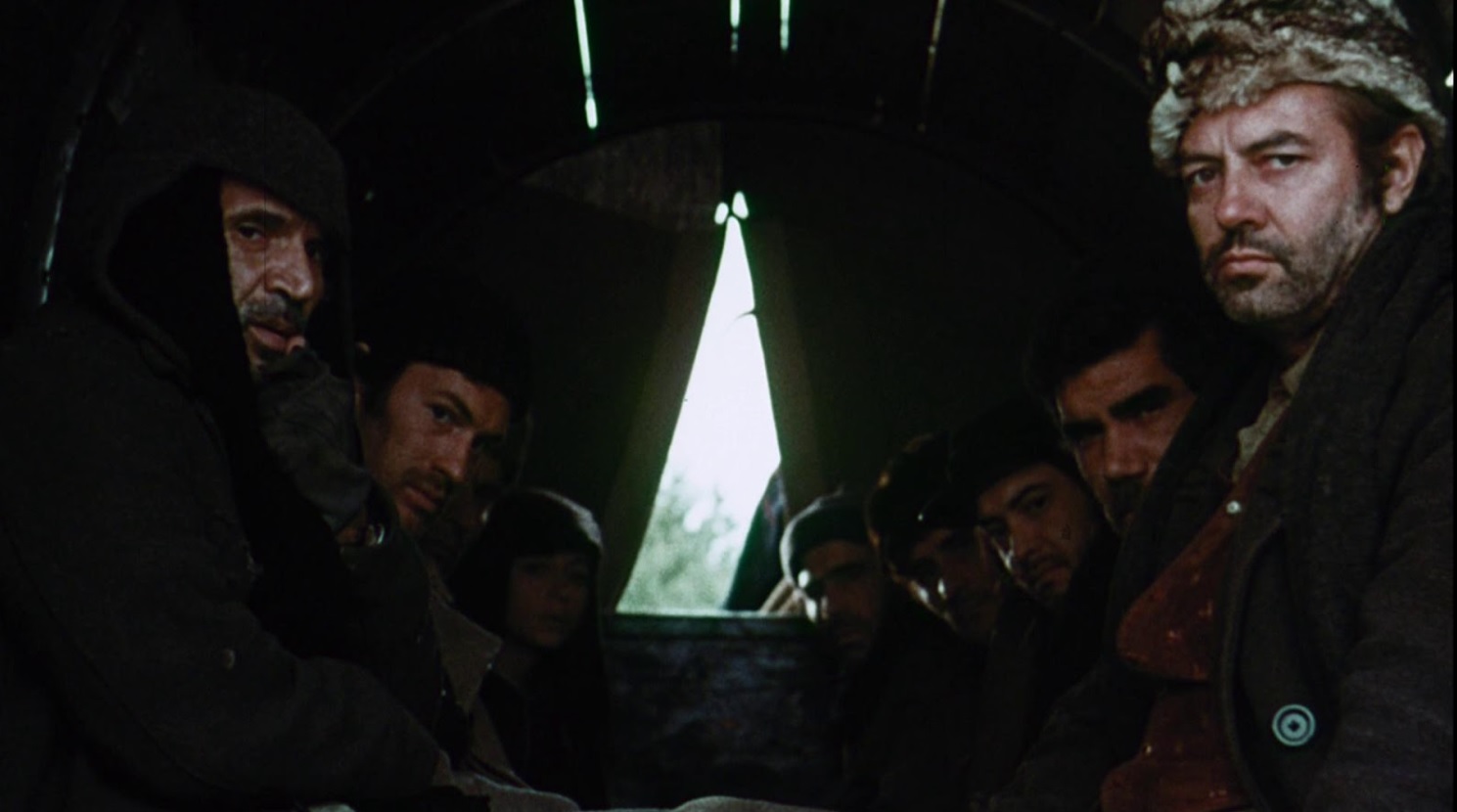
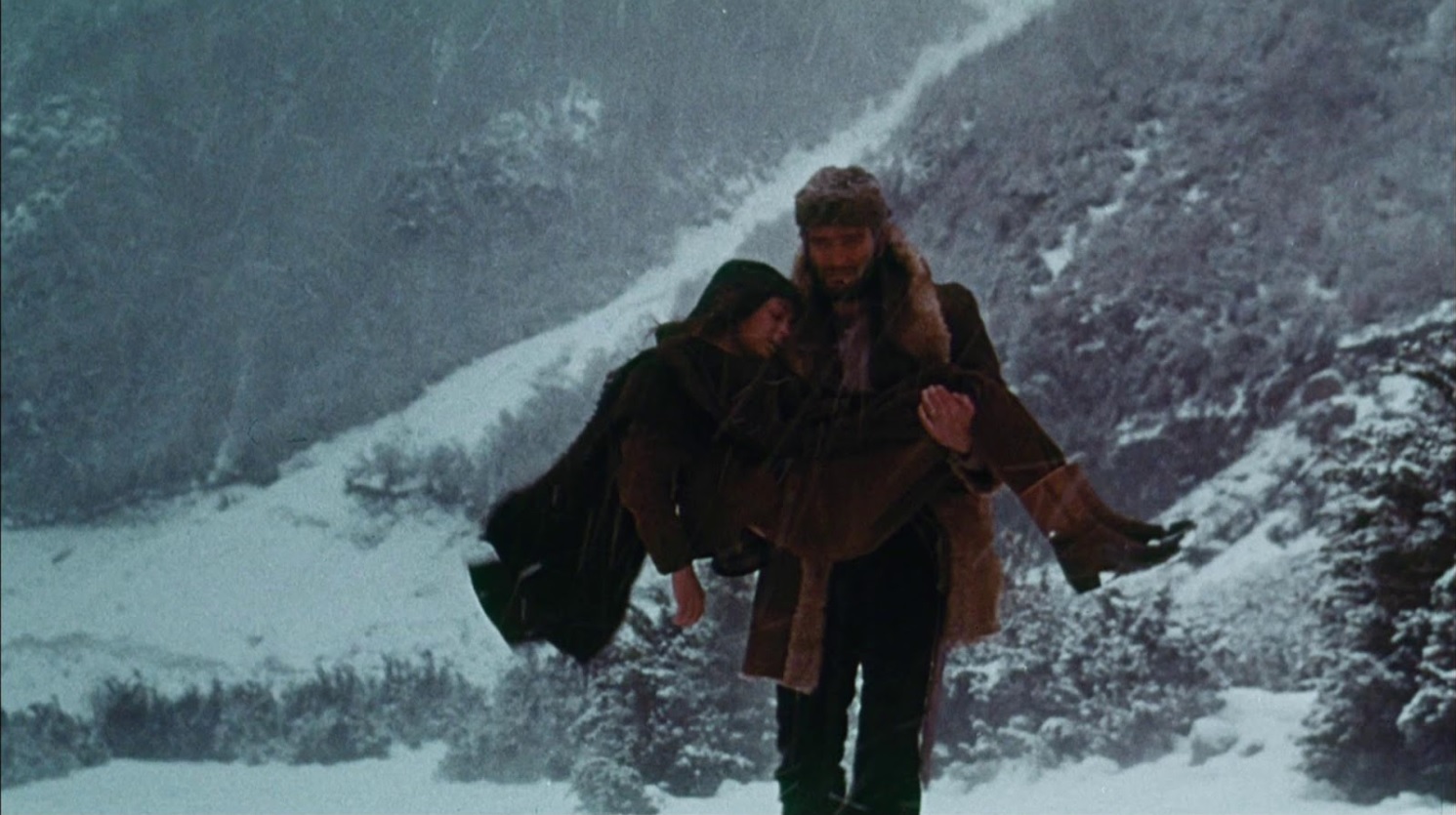
CUT-THROATS NINE (1972) – Joaquín Luis Romero Marchent
Speaking of sadistic, this Spanish-produced, snowbound spin on the fast-fading Italian western certainly takes the cake for the grimmest and goriest Euro-oater I’ve ever seen. After a stagecoach rumored to be carrying stolen gold but definitely ferrying a chain-gang full of convicted criminals is attacked by a redneck clan in the mountains, a Union army sergeant (Robert Hundar) and his teenage daughter (Emma Cohen) must transport their scum-of-the-earth cargo the rest of the way on foot through the frostbitten landscape without getting gutted or molested in transit. Needless to say, they do not entirely succeed. Imagine a fully landlocked and far nastier Con Air but with less flowing Nic Cage mullet hair. Though CT9 is more paella than spaghetti, and probably more horror than western, it’s undoubtedly an early ’70s must-see for those who like their cowboys grindhouse and their endings exceptionally grim. It also features one of the cleverest ways to hide gold in any western of the bunch. I know now why Tarantino had the trailer attached to his Hateful Eight 70mm roadshow.
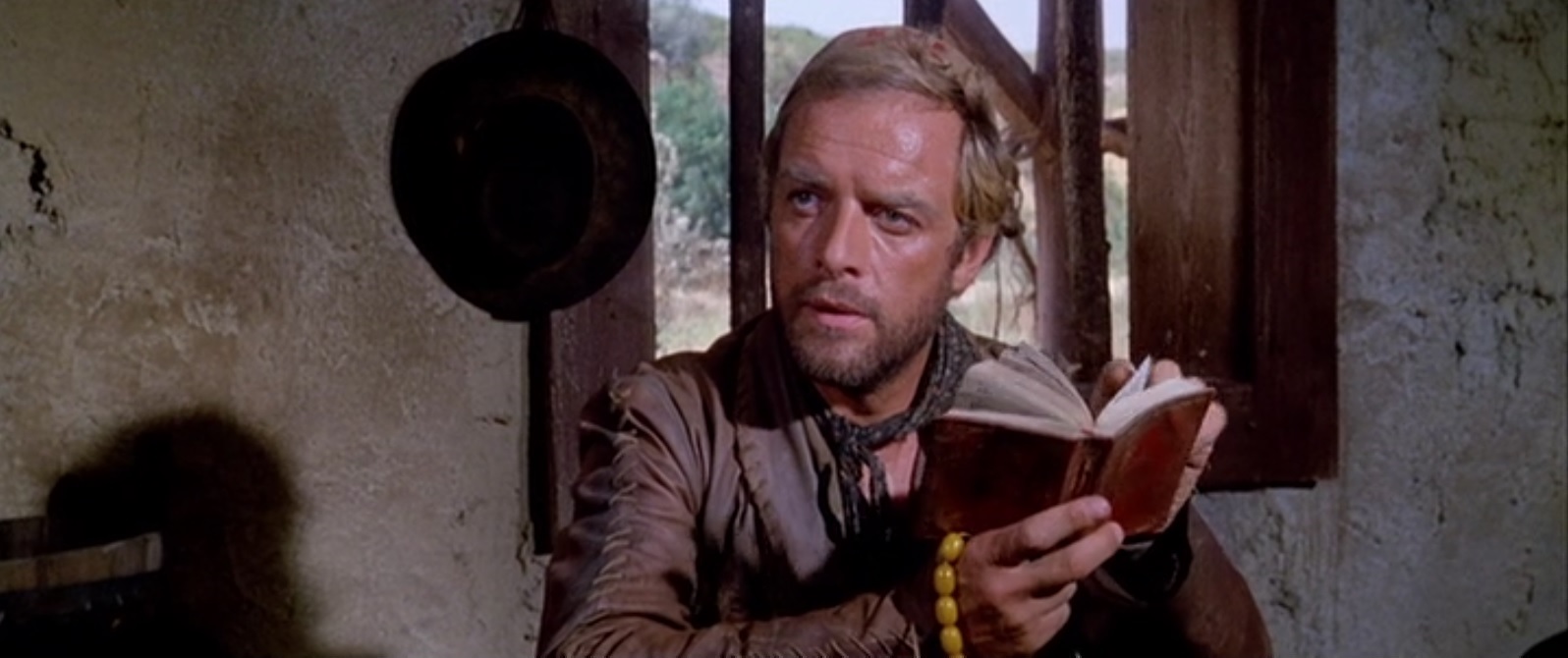
THOSE DIRTY DOGS (1973) – Giuseppe Rosati
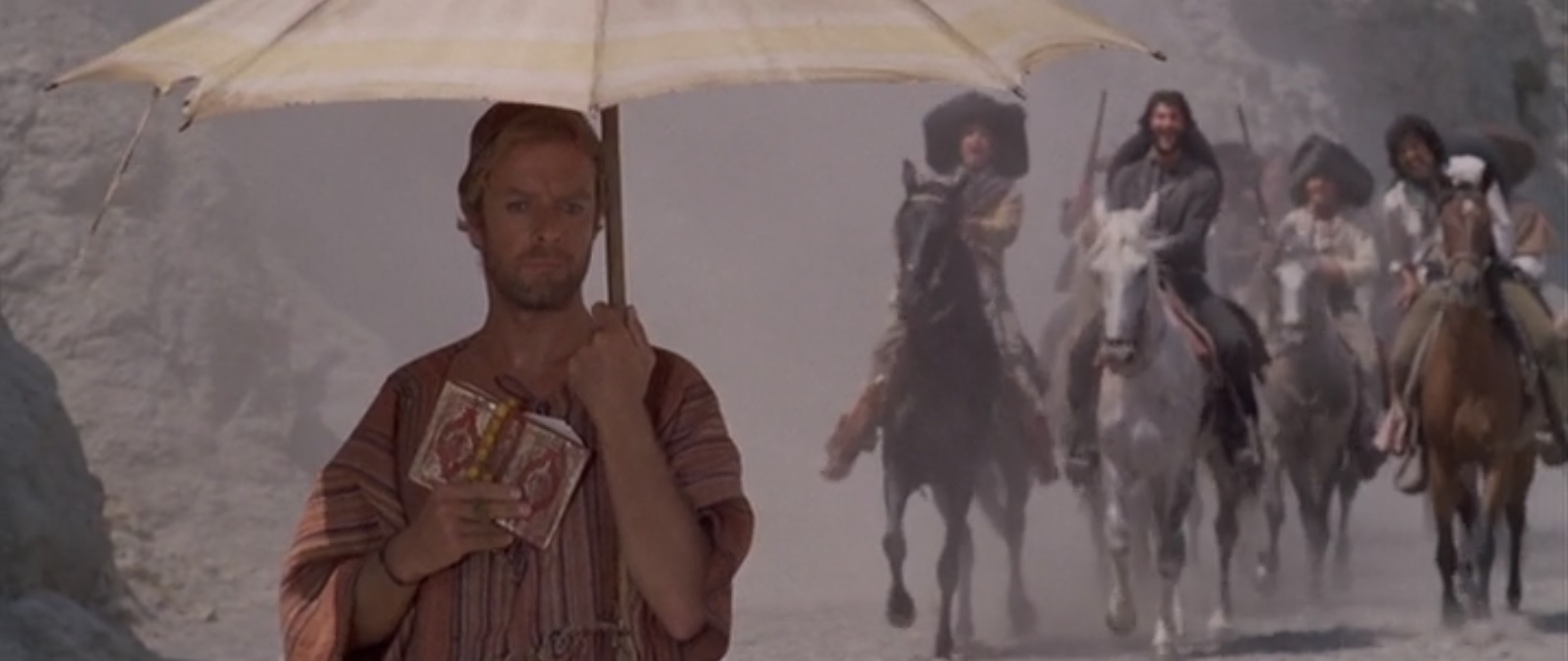
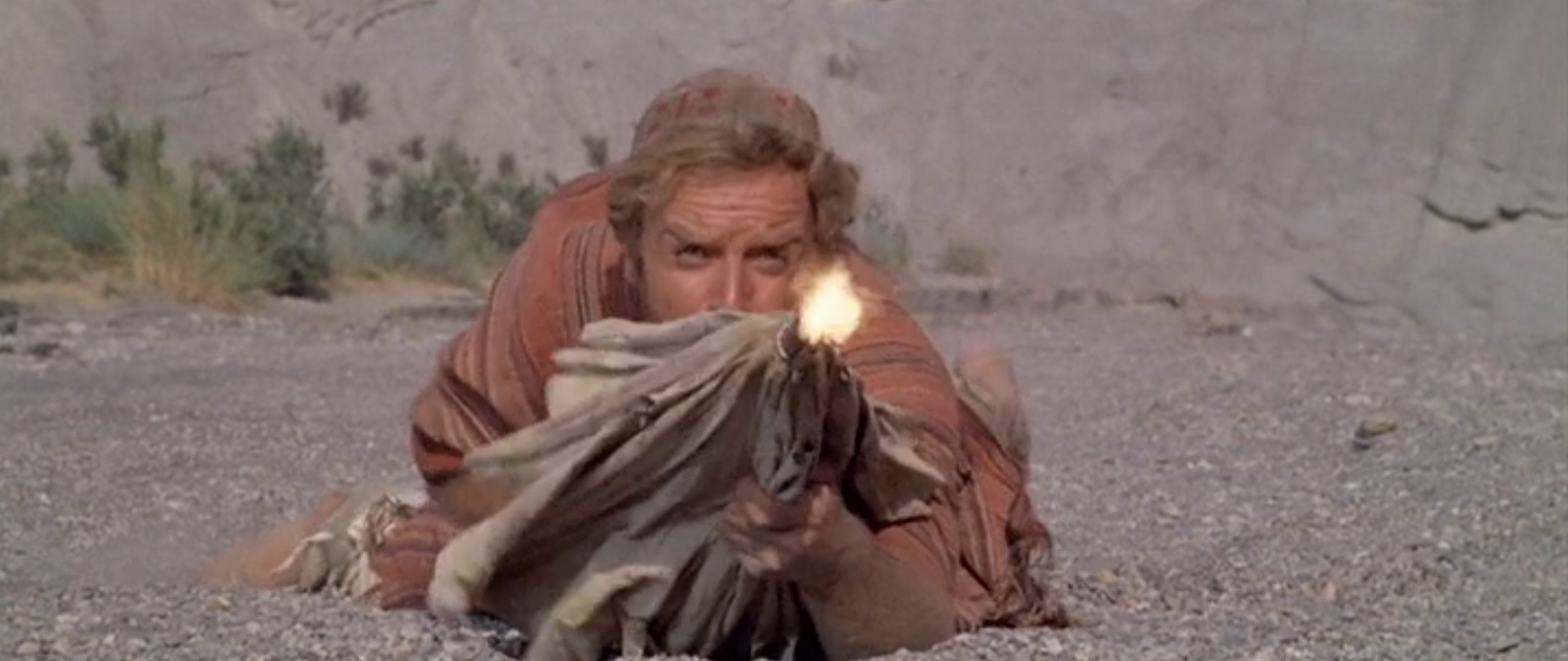
This one’s notable primarily for the odd genre anomaly of Italian western veteran Gianni Garko playing a Muslim bounty hunter named Koran (yes, you read that correctly) who wears a kufi skullcap under his Stetson and frequently quotes Muhammad to his enemies before blasting them with a machine gun hidden in a sun umbrella. The scattershot plot involves Garko teaming up with a cadre of gruff Union soldiers to track down a notorious Mexican bandit, some stolen rifles, and a rich white guy’s buxom abducted daughter. Certainly not the best spaghetti of all time but a peculiarly modern stab at inclusion and diversity as the genre was quickly descending into outright parody by the early ’70s. The near slapstick, minutes-long barracks brawl is not to be missed!

BLOOD MONEY / THE STRANGER & THE GUNFIGHTER (1974) – Antonio Margheriti
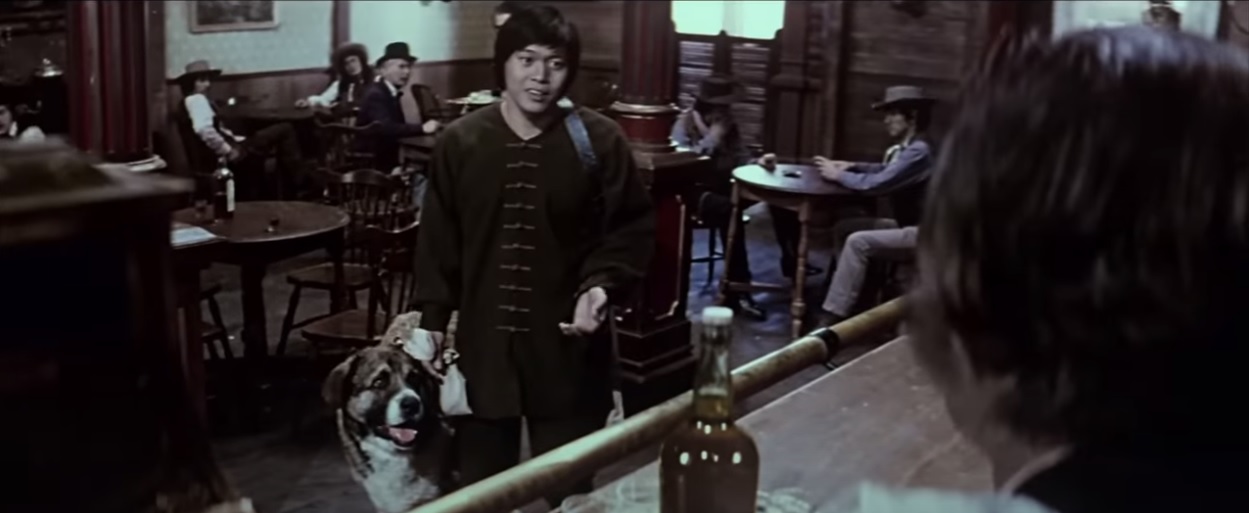
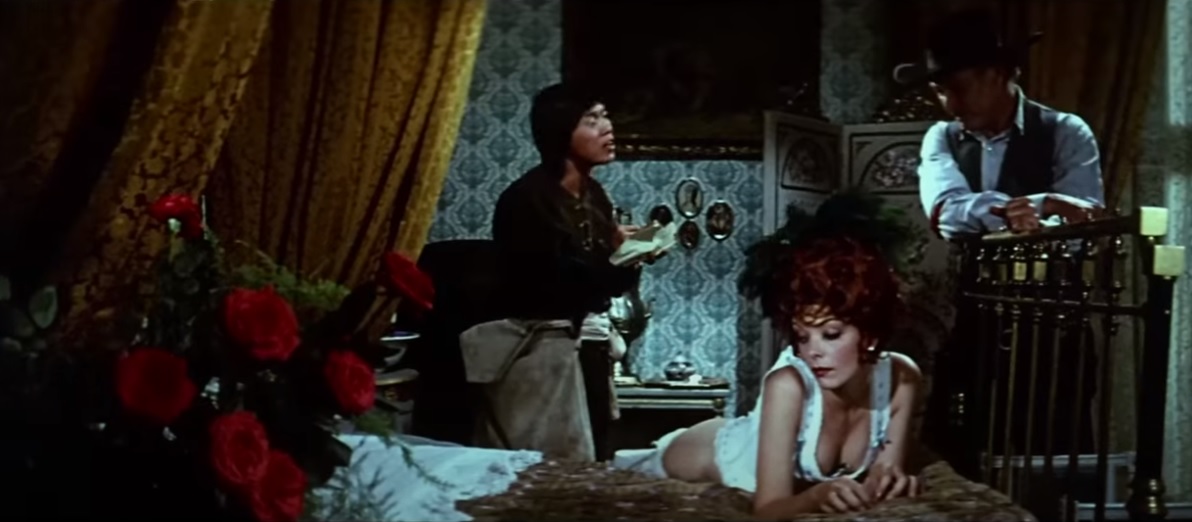
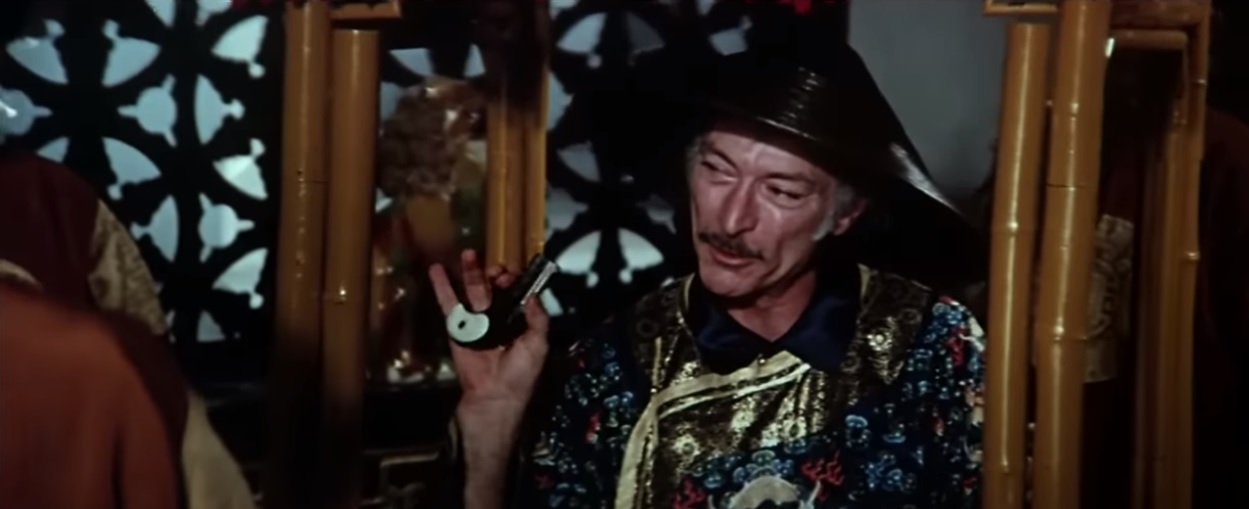
Among the fistful of “lo mein westerns” that hit in the early ’70s in an effort to breathe some kung fu life into the dying spaghetti subgenre, this Shaw Brothers/Italian collab may be the best I’ve seen for the sheer audacity of the plot alone. Chinese martial artist Ho (Lo Lieh from Five Fingers of Death) travels to America to look for clues to his deceased Uncle Wang’s treasure, all of which have been tattooed on the buttocks of four separate women Wang bedded before he died. Ho purposely gets himself incarcerated (a clever trick involving bringing a “therapy dog” into a racist barroom) in order to get close to legendary thief Dakota (Lee Van Cleef), jailed for attempting to break into Uncle Wang’s safe, only to find prurient photos of the aforementioned women. They team up to track down the various wives and saloon gals bearing the coded Chinese “tramp stamps,” doing battle with an evil deacon in black leather and his burly, bare-knuckle Native American boxer henchman along the way. Though lighter on the chopsocky action scenes than the groundbreaking Shanghai Joe the year prior, this Margheriti genre mash-up definitely delivers more fun. Where else are you going to find the “King Boxer” himself inspecting derrières with a jeweler’s loupe or “The Bad” Lee Van Cleef happily sporting a wide-brimmed paddy hat?
THE WHITE, THE YELLOW & THE BLACK (1975) – Sergio Corbucci
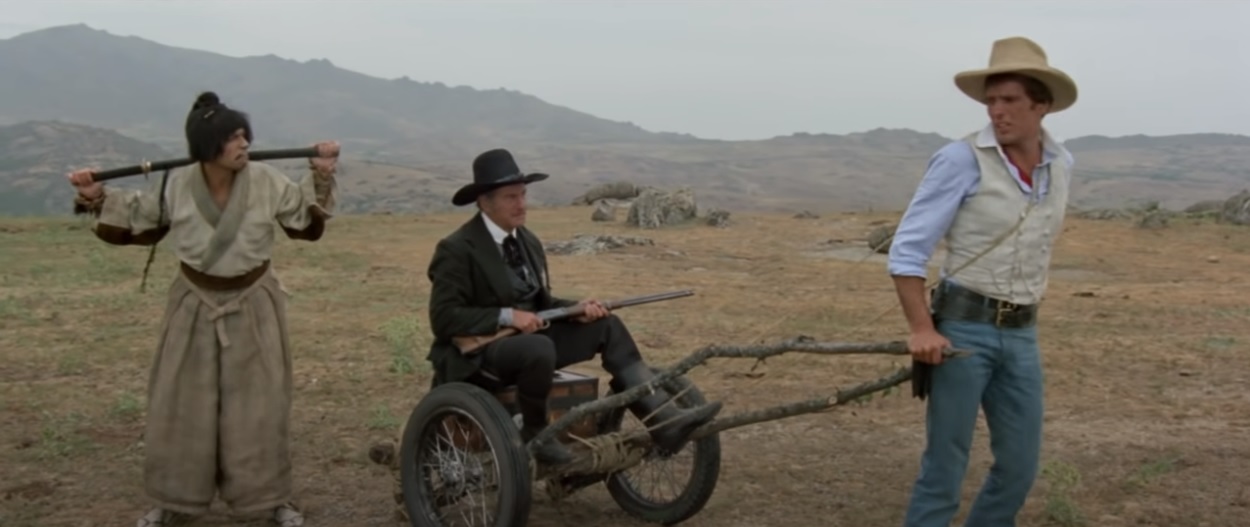
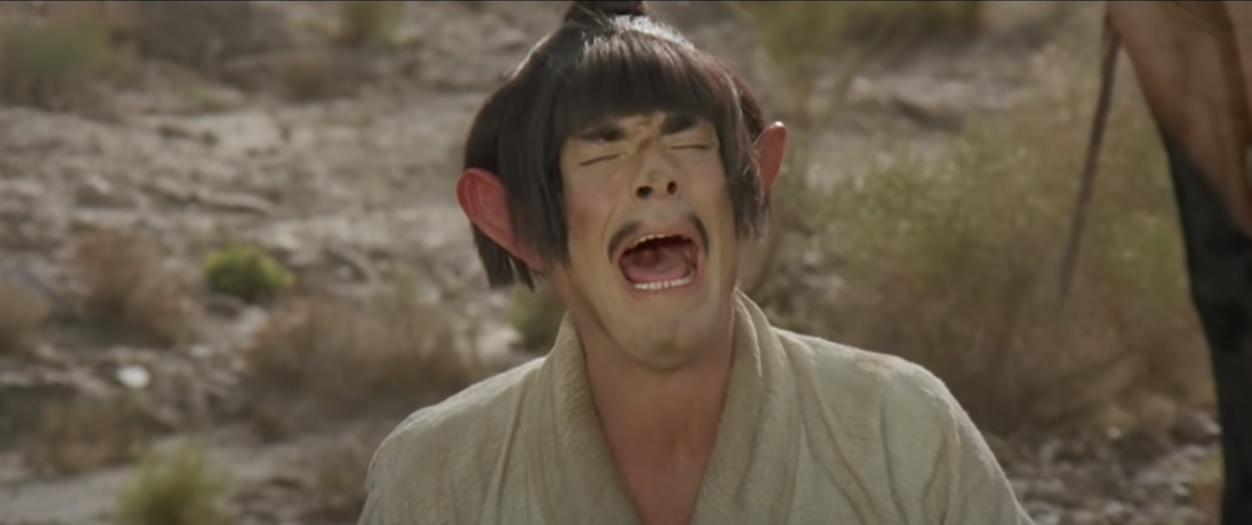
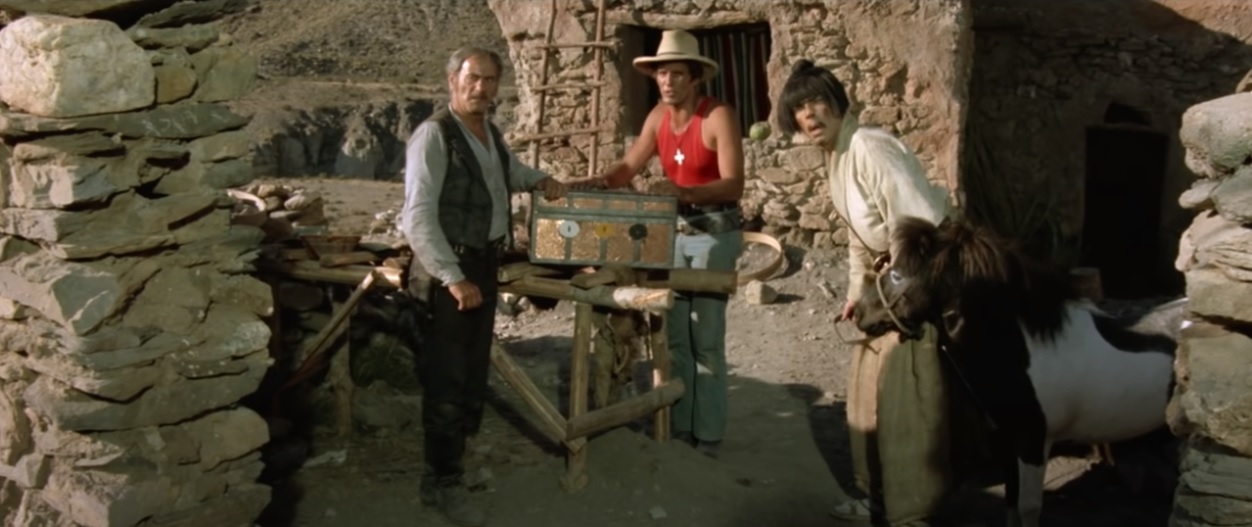
The “other Sergio” brings his illustrious career in westerns (and this blog entry) to a close with a mildly amusing and EXTREMELY DATED genre-spanning parody of Red Sun, Leone’s classic westerns, and the original samurai flicks that spawned the spaghetti boom, with copious verbal and visual nods to his own filmography along the way. When a prized miniature Japanese horse intended as a gift to the U.S. President is supposedly stolen from a train by a band of Apache, an unlucky Sheriff Gideon (Eli Wallach), a resourceful thief named “Swiss” (Giuliano Gemma), and the shamed manservant Sakura (Tomas Milian) charged with scooping its royal droppings must team up to transport a trunk containing the million-dollar ransom to the tribe. To make things more complicated, the trunk is equipped with three color-coded locks (white, yellow, black), one that will open the trunk and another that will detonate the load of dynamite inside. Speaking of which, TRIGGER WARNING: Milian is basically channeling Mickey Rooney’s “yellowface” performance in Breakfast at Tiffany’s here, muttering in made-up Japanese and constantly threatening to commit hari kari. In other words, extremely sensitive viewers should avoid this one at all costs…or at least view it within the context of the decade it was made. I doubt Kurosawa would’ve approved, though he might’ve chuckled here and there, since this movie is essentially Corbucci’s playful open admission that an entire decade of spaghetti was based on a simple act of horse thievery, that of Leone’s original co-opting of Yojimbo back in 1964.
Until next time…happy trails, folks. 🤠
 MATT BURCH